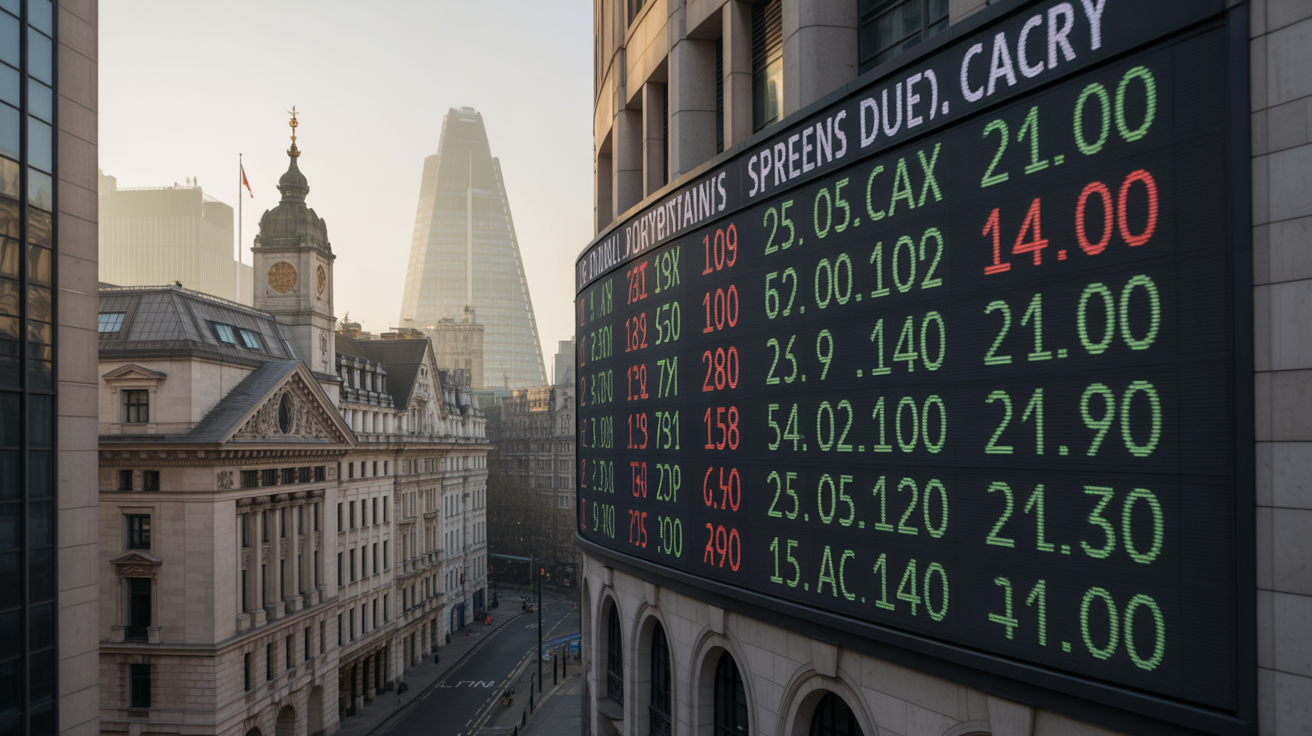
It is just after the opening bell in Europe. Coffee is still warm on the desk. Futures are flickering between green and red. Somewhere in Frankfurt, London, and Paris, traders are already deep into their first decisions of the day. That quiet tension before markets fully wake up is where the story of Europe’s big three indices begins again. The DAX, the FTSE 100, and the CAC 40 are more than just numbers on a screen. They are living barometers of confidence, fear, growth, and sometimes plain old speculation.
Right now, these indices matter more than they have in years. Inflation is no longer the only villain. Growth is patchy. Central banks are balancing between patience and pressure. And geopolitical tremors still ripple through supply chains and balance sheets. For investors, this is not a sleepy market cycle. This is one where attention pays.
So where are the real movers in Europe today. Which stocks are pulling the indices higher. Which ones are dragging their heels. And more importantly, where could the next big swing come from. Let us step inside the DAX, the FTSE, and the CAC and see what stories they are telling.
Why These Three Indices Still Run the European Show
Before diving into daily movers and sector rotations, it is worth pausing on why these three indices still command global attention.
The DAX is Germany’s industrial heartbeat. It reflects the strength and weaknesses of exporters, carmakers, chemical giants, and high-tech manufacturers. When the DAX moves, you can often feel it in global trade data a few months later.
The FTSE 100 is a curious hybrid. It is called a British index, but in truth it is a global earnings machine. Energy majors, mining giants, global banks, and consumer brands with worldwide reach dominate its weight. A shift in China, oil prices, or the dollar often hits the FTSE before it shows up in domestic UK data.
The CAC 40 carries the French corporate crown jewels. Luxury goods, aerospace, energy, banking, and consumer empires give it a unique mix that blends domestic demand with international prestige.
Together, these three offer a front-row seat to Europe’s economic mood. They also move money across the world.
The DAX: Germany’s Industrial Engine Under Pressure and Promise
If European markets had a personality, the DAX would be the hard worker in the room. Disciplined, export-focused, and sensitive to the global cycle.
What Has Been Moving the DAX Recently
Over the past year, the DAX has danced between optimism and restraint. Auto stocks like Volkswagen, BMW, and Mercedes-Benz have been center stage. Electric vehicle transitions, China exposure, and cost pressures have turned earnings seasons into dramatic events for investors. One strong guidance update can lift the entire index. One weak China sales report can sink it just as fast.
Industrial heavyweights such as Siemens, BASF, and Heidelberg Materials have also played leading roles. When global manufacturing data improves, these stocks tend to move first. Chemical and industrial companies are often early-cycle indicators, and traders watch them closely for economic clues.
Technology also deserves a mention. SAP alone holds massive influence over the index. A strong cloud revenue forecast from SAP can feel like a mini rally all by itself. For many traders, SAP earnings are almost a separate event calendar.
The Big Themes Driving DAX Movers
Several powerful themes are shaping how the DAX moves right now.
First, energy costs still matter. German industry remains sensitive to electricity and gas prices. When energy markets calm down, it eases pressure on margins. When prices spike, traders quickly cut exposure to heavy industry.
Second, China remains crucial. German exports rely heavily on Chinese demand for machinery, cars, and chemicals. A weak Chinese PMI can send DAX futures lower before Europe even opens.
Third, the euro plays a quiet but important role. A softer euro boosts exporters’ revenue when converted back to domestic currency. A stronger euro does the opposite. Currency traders and equity traders watch each other carefully here.
Real World Example from the Trading Floor
Not long ago, I spoke to a Frankfurt-based trader who had been riding Siemens for months. His logic was simple. Infrastructure spending was rising globally. Orders were improving. But when a weak Asian factory data print hit the wires one morning, Siemens was suddenly offered down more than 3 percent at the open. The fundamentals had not changed overnight. The mood had.
That is the DAX in a nutshell. Long-term industrial optimism meets short-term economic nerves.
The FTSE 100: A Global Commodity and Income Machine
If the DAX is about exports and industry, the FTSE 100 is about global cash flow. Oil, gas, metals, and dividends dominate the conversation.
Why the FTSE Behaves Differently
One of the strangest things for new investors to learn is that the FTSE often rises when the UK economy struggles. That is not a mistake. It is a structure issue. The largest FTSE stocks earn most of their money overseas. When the pound weakens, foreign earnings become more valuable in sterling terms.
Energy giants like Shell and BP carry massive weight. When oil prices rise, the FTSE often finds support even if domestic data looks ugly. The same goes for mining companies like Rio Tinto, BHP, and Glencore. A rally in copper or iron ore can light up the index.
Banks such as HSBC and Barclays add another layer. They are sensitive to interest rates, credit conditions, and emerging markets exposure. A small shift in bond yields can set off a big move in these stocks.
Recent Movers and Their Stories
In recent months, energy stocks have been the headline makers. Every twist in Middle East tensions or OPEC policy feeds straight into FTSE performance. One surprise production cut from OPEC can send Shell and BP sharply higher and pull the index with them.
Mining shares have been swinging with Chinese infrastructure hopes. A hint of stimulus from Beijing can spark a rally across the miners. Disappointment can be just as swift in the other direction.
Consumer staples like Unilever and Diageo have had their own struggles with pricing power, currency exposure, and emerging market demand. When guidance misses expectations, the effect is immediate.
The Income Investor’s Playground
The FTSE is famous for one thing above all. Dividends. Pension funds, retirees, and income-focused investors from around the world come to the FTSE for yield. Even in periods of flat price performance, dividend income can be substantial. That characteristic makes FTSE moves feel calmer than the DAX at times, even when volatility is present under the surface.
The CAC 40: France’s Blend of Luxury, Industry, and Energy
Paris tells a different market story altogether. The CAC 40 mixes some of the most glamorous global brands with old-school industrial power.
Luxury as a Market Driver
Luxury stocks dominate the emotional tone of the CAC. LVMH, Hermès, Kering, and L’Oréal are not just stocks. They are symbols. When wealth is expanding globally, these companies flourish. When consumers pull back, investors feel it instantly.
Chinese tourist demand, US consumer confidence, and global travel trends all feed directly into French luxury earnings. Even a slight dip in duty-free shopping data can knock billions off market value.
Industrial and Energy Weight
Alongside luxury, the CAC includes energy giant TotalEnergies, aerospace group Airbus, and utility major Engie. These stocks respond to oil prices, airline orders, and power market regulations. Airbus order books in particular can move the index on major deal announcements from airlines in Asia and the Middle East.
A Market That Feels the Mood
The CAC has always had a slightly emotional character. Political developments in France, pension reforms, labor strikes, and regulatory changes often bring short-term volatility. International investors watch Paris closely for policy signals as much as corporate earnings.
A Snapshot Comparison of the Big Three Indices
To put their character differences into perspective, here is a simple summary table.
| Index | Main Sectors Driving Moves | Key External Influences | Typical Investor Profile |
|---|---|---|---|
| DAX | Autos, Industrials, Tech | China growth, energy prices, euro | Growth and cyclical investors |
| FTSE 100 | Energy, Mining, Banks, Staples | Oil, metals prices, USD and GBP | Income and global macro investors |
| CAC 40 | Luxury, Energy, Aerospace, Banks | Global consumer demand, oil, EU policy | Brand-driven and global消费 story investors |
This table makes one thing clear. These indices may trade in the same European time zone, but they often react to very different global stories.
Where the Main Opportunities Are Taking Shape
Every market shake-up brings fresh opportunity. Right now, several stand out across the three indices.
Industrial Recovery Plays in the DAX
If global manufacturing continues to stabilize and modestly recover, German industrials could benefit first. Capital goods orders tend to lead the economic cycle. Names tied to automation, electrification, and infrastructure are already seeing improving pipelines.
Electrical engineering, grid infrastructure, and energy efficiency solutions are also emerging as long-term growth narratives. They may not surge overnight, but they offer a steady tailwind.
Energy and Materials in the FTSE
Energy remains a double-edged sword, but volatility itself creates opportunity. When oil prices fall sharply on recession fears, energy stocks often overshoot to the downside. Long-term investors frequently step in at those moments for income and recovery potential.
Mining exposure offers leverage to electrification, electric vehicles, and renewable infrastructure. Copper, nickel, and lithium are increasingly strategic metals. FTSE mining stocks provide one of the simplest ways to access that trend.
Global Brands in the CAC
Luxury is cyclical, but it is also remarkably resilient. High-end consumers tend to recover spending faster than the mass market. Periods of weakness in luxury stocks often prove temporary for patient investors.
Aerospace also remains compelling. Global air traffic continues to normalize long-term demand. Aircraft order backlogs are massive. Even if deliveries slow temporarily, the long runway for growth is still there.
The Risks That Keep Traders Checking Headlines
Opportunity and risk always walk hand in hand. Right now, several hazards are firmly in view.
Slowing Global Growth
If the US or China tips into a harder-than-expected slowdown, European exporters will feel it fast. The DAX would likely take the first hit, followed by cyclically exposed CAC stocks.
Sticky Inflation and Interest Rates
Lower inflation was supposed to be the gift that kept giving. Instead, persistence in services inflation has complicated the rate cut story. If central banks are forced to keep rates higher for longer, equity valuations come under pressure. Banks may benefit temporarily, but consumer-facing stocks often struggle.
Geopolitical Shocks
Energy markets remain vulnerable to geopolitical disruption. A sudden flare-up affecting shipping routes or oil production can ripple instantly into FTSE energy stocks and through to consumer prices elsewhere.
Currency Swings
Large currency moves can distort earnings expectations quickly. A surging euro may hurt German exporters. A rapidly weakening pound can stoke inflation fears in the UK. Currency risk is often underestimated by equity-only investors.
How Market Movers Translate Into Real Investor Decisions
It is easy to talk in abstract terms about indices, sectors, and trends. Let us bring it back to the individual investor for a moment.
Imagine a retiree in southern Spain who relies on portfolio income. The FTSE 100’s energy and bank dividends look appealing. When oil dips and FTSE energy stocks sell off, this investor may quietly add shares for yield rather than chasing capital gains.
Now consider a young engineer in Munich investing for retirement in 30 years. She might favor DAX automation and semiconductor-related stocks, betting that Europe’s industrial base still has decades of relevance ahead.
Or picture a Paris-based entrepreneur who closely follows global consumer trends. A dip in luxury stocks after a weak US consumer report might look like an opportunity rather than a warning.
Same market. Different objectives. Different interpretations of the same price movement.
What the Charts Are Hinting At in Simple Terms
While this article avoids technical complexity, the broad technical picture across Europe offers some useful clues.
The DAX has spent long periods consolidating near recent highs, suggesting a market that is waiting for the next macro cue. Breakouts have tended to follow major data surprises rather than slow drifts.
The FTSE has shown more sideways grinding action, held up by dividends even when growth fears rise. It often underperforms in risk-on surges but holds up better in periods of caution.
The CAC has been more momentum-driven, powered by luxury rallies and sharp pullbacks when global consumer sentiment sours.
None of this guarantees future direction. But it helps explain why these markets often diverge even on the same news day.
Practical Ways Investors Can Approach These Indices Now
No two investors should approach the DAX, FTSE, and CAC in exactly the same way. Still, some common principles apply.
Diversify Across the Three
Owning exposure across all three indices reduces reliance on any single macro theme. When energy rallies and industrials lag, FTSE exposure may cushion the impact. When exporters surge, the DAX can carry performance.
Match Index Exposure to Personal Goals
Income seekers naturally lean toward the FTSE. Growth-oriented investors may prefer the DAX and parts of the CAC. Brand and consumer trend enthusiasts often feel most at home in the CAC luxury complex.
Be Patient With Cyclical Pullbacks
Many of the largest stocks in these indices are deeply cyclical. Autos, energy, aerospace, and mining all move in waves. Chasing strength after rapid rallies often leads to buying near short-term tops. Waiting for broader market pullbacks has historically rewarded patience.
Watch the Macro Calendar
European index movers often react more to global data than domestic headlines. US inflation numbers, Chinese growth data, and central bank meetings frequently overpower local European news. Keeping an eye on that calendar is not optional anymore.
A Look Ahead: What Might Shape the Next Quarter
Looking ahead, several developments could set the tone for the next phase of movement in Europe’s big three.
Central bank policy remains the silent conductor of the orchestra. Even small shifts in language can alter risk appetite quickly.
China’s growth policy will continue to cast a long shadow over the DAX and FTSE miners.
Oil prices are likely to stay volatile as producers balance revenue needs with demand uncertainty.
Global consumers will decide the fate of the CAC’s luxury giants more than any single policy choice.
It is not a calm backdrop. But for active investors, calm markets rarely offer the best opportunities anyway.
The Human Side of Index Investing
One final observation from years of watching these markets. People often talk about indices as if they were machines. They are not. Each index is a crowd. A nervous crowd on some days. A confident crowd on others. Greed and fear still walk through trading rooms every single session, despite all the algorithms and automation.
I have seen traders who swore never to touch luxury stocks panic-buy them during global rallies. I have seen conservative income investors dump high-yield energy shares at precisely the wrong moment during oil sell-offs. The index moves. But human psychology drives much of that motion.
Understanding the character of each index helps steady the nerves when prices move fast. It reminds us that behind every tick is a mix of rational calculation and emotional reaction.
Key Takeaways for Investors
To bring the discussion into practical focus:
The DAX is a bet on global industrial momentum, with China, energy prices, and technology adoption playing vital roles.
The FTSE 100 offers global commodity exposure and income potential, often moving to the rhythm of oil, metals, and currencies.
The CAC 40 blends luxury consumption with industrial and energy exposure, making it sensitive to global consumer confidence.
Each index tells a different story about the European and global economy. Together, they offer a powerful cross-section of opportunity and risk.
Conclusion: Europe’s Markets Are Wide Awake
The DAX, FTSE, and CAC are not just reacting to today’s news. They are constantly pricing in expectations about tomorrow. About next quarter. About next year. Every rally and sell-off reflects shifting beliefs about growth, inflation, stability, and risk.
Right now, Europe’s big three indices are wide awake. They are restless. They are reacting to every new data point, every geopolitical whisper, every policy nuance. For investors, this makes the landscape challenging but also rich with possibility.
If you approach these markets with patience, curiosity, and a clear sense of your goals, they can offer both income and growth over time. There will be false starts. There will be sharp reversals. That is the nature of active markets.
But one thing is certain. The DAX, the FTSE, and the CAC will continue to tell the story of Europe’s economic hopes and fears in real time. And for those willing to listen closely, they will continue to offer valuable clues about where money might flow next.
In a world that rarely slows down, these indices remain some of the clearest windows into how global capital is thinking right now. And that, more than ever, makes them worth watching.