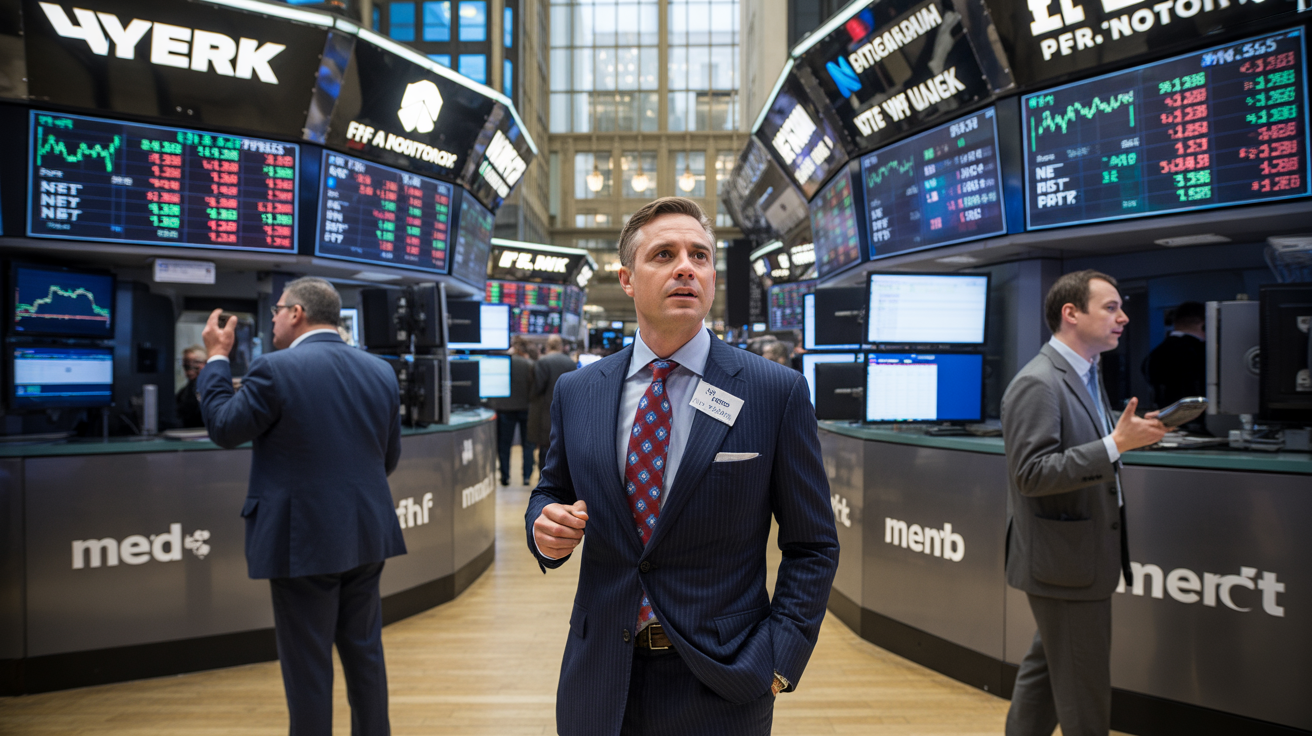
A few weeks ago, I ran into an old friend at a crowded airport lounge. She manages money for high net worth clients and usually has an opinion on everything market-related. This time, though, she sounded almost amused. “You know what keeps me up at night now?” she said. “It’s not tech earnings or the Fed. It’s flows. ETF flows.”
That short line captures a big truth about today’s markets. Exchange-traded funds, once a niche product for index geeks, are now a central force shaping how stocks, bonds, and even commodities behave. Passive investing, carried largely by ETFs, is no longer just an alternative to active management. It is the gravitational pull around which prices orbit.
If you own a retirement account, a trading app portfolio, or even a target-date fund at work, odds are you already ride this wave whether you think about it or not. The rise of ETFs has changed how quickly markets move, how correlations behave in a crisis, and even how corporate executives think about their own share prices.
So why does this matter now more than ever? Because the scale is impossible to ignore. Trillions of dollars now flow through products that buy and sell based on rules, not opinions. Markets have always reflected human emotion. Today, they also reflect algorithms, index rebalancing schedules, and the quiet drip of automated monthly contributions from millions of savers. That mix has created new opportunities, new risks, and a whole new set of market dynamics that investors need to understand.
Let’s unpack what is really happening under the hood of the ETF boom and why passive investing is no longer a side story. It is the main plot.
From Side Act to Center Stage: How ETFs Took Over
It is easy to forget how young the modern ETF industry really is. The first widely traded US ETF appeared in the early 1990s, designed to track the S&P 500. At the time, many professionals dismissed it as a novelty. Why would anyone want to settle for average when they could pay a skilled manager to beat the market?
Fast forward to today, and that question feels almost quaint. Index-tracking ETFs sit at the heart of portfolios for pension funds, universities, robo-advisors, hedge funds, and millions of individual investors. The appeal is straightforward. They are cheap, transparent, tax-efficient, and easy to trade. For a generation raised on smartphones and instant access, clicking “buy” on a broad market ETF feels as natural as ordering coffee.
The numbers tell the story better than any marketing pitch ever could. Global ETF assets have surged into the tens of trillions of dollars. Every year, a larger share of net new investment dollars flows into passive products rather than traditional active mutual funds. In certain equity categories, passive funds already own a sizable chunk of all publicly traded shares.
This shift has not been smooth or quiet. It unfolded through several key chapters. First came the cost revolution, as fierce fee competition drove expenses toward rock-bottom levels. Then came the explosion of choice, with ETFs targeting everything from entire countries to narrow industry niches. Finally, the pandemic era poured gasoline on the trend as homebound investors piled into easy, liquid products to chase both safety and opportunity.
What began as a simple bet on the idea that most active managers underperform the market has turned into a structural change in how markets function.
The Mechanics of Passive Power
To understand why ETFs now move markets in such a powerful way, you have to understand how they work in practice. On the surface, an ETF is just a basket of securities that trades like a stock. Underneath, it is a finely tuned machine for translating investor demand directly into real-world buying and selling.
When money flows into an equity ETF that tracks a broad index, the fund does not simply sit on that cash. Through a creation and redemption process run by large institutional partners, known as authorized participants, the ETF issues new shares and acquires the underlying stocks in precise proportions. If billions flood into the fund, billions go into the actual market. The same process works in reverse when investors pull money out.
Now scale that across hundreds of funds and thousands of securities, and you can start to see the impact. When investors collectively become optimistic about US stocks, flows push into broad ETFs and lift the entire market at once. When fear takes hold, outflows can create synchronized selling that ripples through every component of an index, regardless of individual fundamentals.
This is where passive investing begins to influence market dynamics in ways that go beyond simple ownership. It changes how flows behave, how correlations tighten in stressful moments, and how quickly sentiment can translate into price action.
You can often spot these effects on volatile days. Good or bad news hits, futures spike, and within minutes, massive ETF volumes start printing across the tape. Stocks that have little direct connection to the news move in lockstep because they sit in the same popular funds. In those moments, the market feels less like a collection of individual businesses and more like a giant, interconnected organism.
Correlations on Steroids
One of the most discussed side effects of the ETF boom is the rise in correlations. In plain English, more stocks move together more often than they used to. This is not just a feeling traders have at their screens. It shows up clearly in the data.
When investors buy or sell broad market ETFs, they are effectively trading the entire basket at once. That means the underlying stocks rise and fall together, even if their earnings prospects or balance sheets look completely different. In calm markets, this effect is subtle. During periods of stress, it becomes hard to ignore.
Think back to the early days of the pandemic. Fear hit the market like a tidal wave. ETFs tracking major indices saw enormous outflows in a very short time. Stocks from airlines to software companies to consumer staples all fell in unison. Active investors hunting for safe corners of the market found fewer places to hide, at least in the short term.
Higher correlations can make diversification feel less effective during sharp drawdowns. It is not that diversification no longer works over the long run. It is that the short-term ride can feel rougher when everything seems to move at once.
This has practical implications for how portfolios behave and how risk is managed. Traditional models that assume stable correlations can underestimate how tightly linked assets become when passive flows dominate the tape.
Liquidity, Real and Perceived
Another hotly debated topic is liquidity. ETFs are praised for their ability to trade all day long, even when underlying securities are less liquid. In normal conditions, this structure works remarkably well. Market makers keep spreads tight, and investors can enter or exit positions with ease.
But what happens when markets seize up?
In the bond ETF world, this question has drawn particular scrutiny. Many corporate bonds trade infrequently, yet bond ETFs change hands continuously. During episodes of stress, such as the 2020 market shock, some bond ETFs traded at noticeable discounts or premiums to their stated net asset values. Critics warned that this was proof of hidden fragility.
Supporters countered that ETFs were actually providing valuable price discovery when the underlying bond market was struggling to trade at all. Instead of being a source of instability, ETFs served as a real-time thermometer for where prices truly stood.
The truth, as usual, lies somewhere in the middle. ETFs enhance liquidity at the surface level by making it easy to trade exposure. At the same time, they concentrate trading into the fund shares rather than the underlying securities, especially in stressed environments. This can create air pockets in the market where price moves feel exaggerated.
For everyday investors, liquidity is usually a net positive. It allows quick rebalancing and flexible positioning. For the market as a whole, it adds a layer of complexity that regulators and professionals continue to debate and monitor.
Thematic and Niche ETFs: From Core to Color
Passive investing is often equated with broad, vanilla index funds. But one of the most striking trends of the past decade has been the explosion of thematic and niche ETFs. Investors can now buy baskets focused on clean energy, artificial intelligence, cybersecurity, frontier markets, and even highly specific trading strategies.
These products blur the line between passive and active. While they still follow predefined rules, the choice of theme and index construction reflects a clear investment view. When these funds capture the public imagination, their flows can have an outsized impact on a narrow slice of the market.
We saw this vividly during the technology and innovation boom of the late 2010s and early 2020s. As investor enthusiasm surged for futuristic themes, money poured into ETFs focused on electric vehicles, biotechnology, and digital platforms. Stocks included in these funds often experienced dramatic rallies that were fueled as much by ETF demand as by fundamental earnings growth.
When sentiment later cooled, outflows created equally dramatic reversals. The same mechanism that amplified upside also magnified declines. For traders and long-term investors alike, understanding which stocks sit inside popular ETFs has become just as important as analyzing company balance sheets.
This phenomenon has also influenced corporate behavior. Executives now pay close attention to index inclusion and ETF ownership. Being added to a major index can trigger significant buying pressure, while removal can spark forced selling. Index committees have become quiet kingmakers, capable of moving billions of dollars with a single decision.
A Simple Snapshot of Key ETF Trends
To put some of these changes into perspective, here is a simplified snapshot of how ETF trends have reshaped different parts of the market:
| Trend | What Is Happening | Market Impact |
|---|---|---|
| Asset Growth | Trillions flowing into ETFs globally | Greater influence on price movements |
| Rising Correlations | Stocks move together more often | Diversification benefits compressed short term |
| Thematic Expansion | Surge in niche and sector ETFs | Amplified booms and busts in select industries |
| Fee Compression | Costs driven to near zero in some funds | Pressure on active managers and brokers |
| Retail Participation | Trading apps and automation boost access | Faster sentiment-driven swings |
This table only scratches the surface, but it highlights how ETFs are no longer just another product on the shelf. They are part of the market’s basic infrastructure.
The Active Investing Question: Crowd Out or Catalyst?
One of the most emotional debates in finance today revolves around the future of active management. Critics of the ETF boom argue that passive investing crowds out price discovery. If everyone buys the market regardless of valuations, who is left to decide what a stock is really worth?
It is a fair question. Markets need disagreement to function efficiently. They need buyers and sellers who form independent views about future cash flows, risks, and growth. If too much money simply tracks indices, the fear is that prices could drift away from fundamentals for longer periods.
Yet the story is not one of active investing disappearing. Instead, its role is evolving. Active managers increasingly focus on areas where passive is weaker, such as small-cap stocks, complex credit instruments, and private markets. Others position themselves as risk managers who shift exposure dynamically rather than hugging benchmarks.
There is also a powerful feedback loop at work. Passive funds follow prices. Active investors still set them, at least at the margin. Even if passive vehicles own a large percentage of the market, it is often the smaller slice of active trading that determines where the price clears.
In other words, passive investing needs active investing more than it might appear at first glance. Without analysts, portfolio managers, and traders digging into company fundamentals and economic trends, the indices that ETFs track would have little meaning.
What has changed is the distribution of capital. Passive products often act as the steady tide, while active investors swim as faster currents within it.
The Behavioral Side of Passive Flows
Markets have always been a study in human psychology. What is fascinating about the ETF era is how technology and automation have reshaped that psychology without removing it.
On one hand, passive investing tends to encourage long-term discipline. Automatic contributions, target-date funds, and broad ETFs reduce the temptation to trade on every headline. Many investors now buy steadily through ups and downs, barely glancing at daily price moves. Over time, this behavior can dampen volatility and reward patience.
On the other hand, the same tools can fuel herding during moments of excitement or fear. When social media lights up around a hot trade or a looming crisis, money can rush into or out of ETFs in a matter of hours. The ease of trading makes acting on emotion almost frictionless.
I saw this firsthand during the meme stock frenzy. While much of the spotlight fell on individual names, there was also intense activity in ETFs linked to those segments of the market. Retail traders who did not want to pick single stocks piled into sector funds instead, amplifying broader moves.
The result is a market that can feel calm and mechanical one moment, then wildly emotional the next. Passive tools shape the channels through which emotion flows, but they do not eliminate it.
Opportunities Created by the ETF Ecosystem
For all the debate, it is easy to forget how many doors ETFs have opened for ordinary investors. A few decades ago, building a diversified global portfolio required significant time, expertise, and capital. Today, it can be done with a handful of low-cost funds in a matter of minutes.
This democratization of investing is one of the quiet success stories of modern finance. Small investors now have access to strategies that were once reserved for institutions. They can tilt their portfolios toward growth or income, apply factor-based approaches, or gain exposure to foreign markets with a single trade.
ETFs have also become indispensable tools for professionals. Portfolio managers use them to adjust risk quickly, hedge exposures, or build core positions while researching individual securities. Even hedge funds that pride themselves on bespoke strategies rely on ETFs for liquidity and tactical moves.
There is also innovation at the product level. New ETFs continue to push into areas once thought unsuitable for passive structures, including active-managed ETFs that combine stock picking with ETF liquidity. This hybrid world reflects the industry’s attempt to blend efficiency with differentiation.
For investors willing to learn how these tools work, the opportunity set is broader than ever.
The Risks Under the Surface
Of course, no financial revolution comes without trade-offs. The same features that make ETFs powerful also create new forms of risk.
One risk is concentration. While passive funds are often marketed as diversified, many popular indices are heavily weighted toward the largest companies. If a handful of mega-cap stocks dominate index performance, investors may unknowingly be more concentrated than they realize. This has been particularly evident in technology-heavy markets where a small group of companies drives a disproportionate share of returns.
Another risk lies in complexity. As ETFs grow more specialized, it becomes harder for investors to understand exactly what they own. Two funds with similar-sounding themes can behave very differently in practice. During periods of stress, these differences can lead to unpleasant surprises.
There is also the macro-level concern about what happens if passive ownership continues to climb well beyond current levels. Would voting power become too concentrated in the hands of a few giant asset managers? How would corporate governance evolve if most shareholders are effectively long-term, rules-based holders?
Regulators, academics, and industry leaders continue to study these questions. So far, the system has proven resilient through several major shocks. That does not guarantee smooth sailing forever, but it suggests that the ETF ecosystem is more robust than some early critics feared.
How Passive Investing Shapes Market Cycles
One of the most intriguing aspects of the ETF era is how it influences market cycles themselves. Traditional market lore describes cycles driven by earnings, interest rates, and investor sentiment. Those forces still matter, but passive flows now add another layer.
In bull markets, rising prices attract more inflows into equity ETFs through retirement contributions, performance chasing, and rebalancing. Those inflows, in turn, push prices higher, reinforcing the cycle. It is a gentle feedback loop that can quietly extend rallies.
In bear markets, the same mechanism can accelerate declines. Outflows lead to selling, which pushes prices lower, triggering more redemptions. The difference today is the speed and scale at which these dynamics can play out.
This does not mean ETFs cause market cycles on their own. Economic growth, corporate profits, and monetary policy still set the stage. But passive investing has become a powerful amplifier of the underlying script.
For long-term investors, this can be both a blessing and a test of nerve. The same mechanisms that boost returns during good times can make drawdowns feel sharper when conditions turn.
Practical Takeaways for Everyday Investors
So what does all this mean for someone managing their own money, whether it is a six-figure portfolio or a modest monthly contribution to a retirement plan?
First, respect the power of simplicity. Broad, low-cost ETFs remain some of the most effective tools ever created for long-term wealth building. They remove many of the structural disadvantages that once plagued individual investors.
Second, stay aware of concentration and overlap. Just because you hold several ETFs does not mean you are fully diversified. It is worth taking the time to look under the hood at sector weights, top holdings, and geographic exposure.
Third, remember that liquidity cuts both ways. ETFs can be traded at any moment, but that does not mean every moment is a good time to trade. Emotional decisions in fast-moving markets can be costly, even with the best tools at your fingertips.
Fourth, use thematic ETFs sparingly and strategically. They can add flavor and targeted exposure to a portfolio, but they are often more volatile and sentiment-driven than core holdings.
Finally, keep the long view front and center. Passive investing works best when paired with patience. The true edge of ETFs lies not in day-to-day trading, but in the quiet power of compounding over many years.
Where the ETF Story Goes Next
Looking ahead, it is hard to imagine a future in which ETFs are anything other than a central pillar of global markets. The more interesting question is how their role continues to evolve.
We are likely to see further growth in actively managed ETFs, as traditional stock pickers adapt to investor demand for liquidity and transparency. Fixed income ETFs will almost certainly expand in scope and sophistication, providing more tools for navigating interest rate cycles. International markets, particularly in emerging economies, will continue to adopt ETF structures as local capital markets deepen.
Technology will also play a role. As data analytics, trading algorithms, and portfolio automation become more advanced, the line between passive and active may blur further. What matters to investors is not the label on the product, but how it behaves under real-world conditions.
One thing is certain. The age of passive investing as a quiet background trend is over. It is now a defining feature of how modern markets function.
Conclusion: Riding the Current with Eyes Open
The rise of ETFs and passive investing is one of the most consequential shifts in financial markets in the past half-century. It has lowered costs, broadened access, and reshaped the flow of capital on a global scale. At the same time, it has changed how markets respond to news, how risk spreads, and how investors experience both booms and busts.
For some, this transformation feels unsettling. For others, it feels empowering. In truth, it is both. Like any powerful current, passive investing can carry you forward with remarkable efficiency if you understand how it moves. Ignore its force, and you may find yourself surprised by how quickly the tide can turn.
The key is not to fear ETFs or to treat them as a magic solution, but to use them with intention. Know what you own. Know why you own it. And remember that behind every index and every fund ticker are real businesses, real workers, and real economic forces that ultimately drive long-term value.
Markets will always evolve. Strategies will come and go. But the core challenge of investing remains the same as it ever was: staying rational in an emotional world, patient in a hurried one, and humble in the face of forces bigger than any of us.
If the ETF revolution has taught us anything, it is this: sometimes the most powerful changes in finance arrive not with a crash or a headline, but quietly, one steady flow at a time.