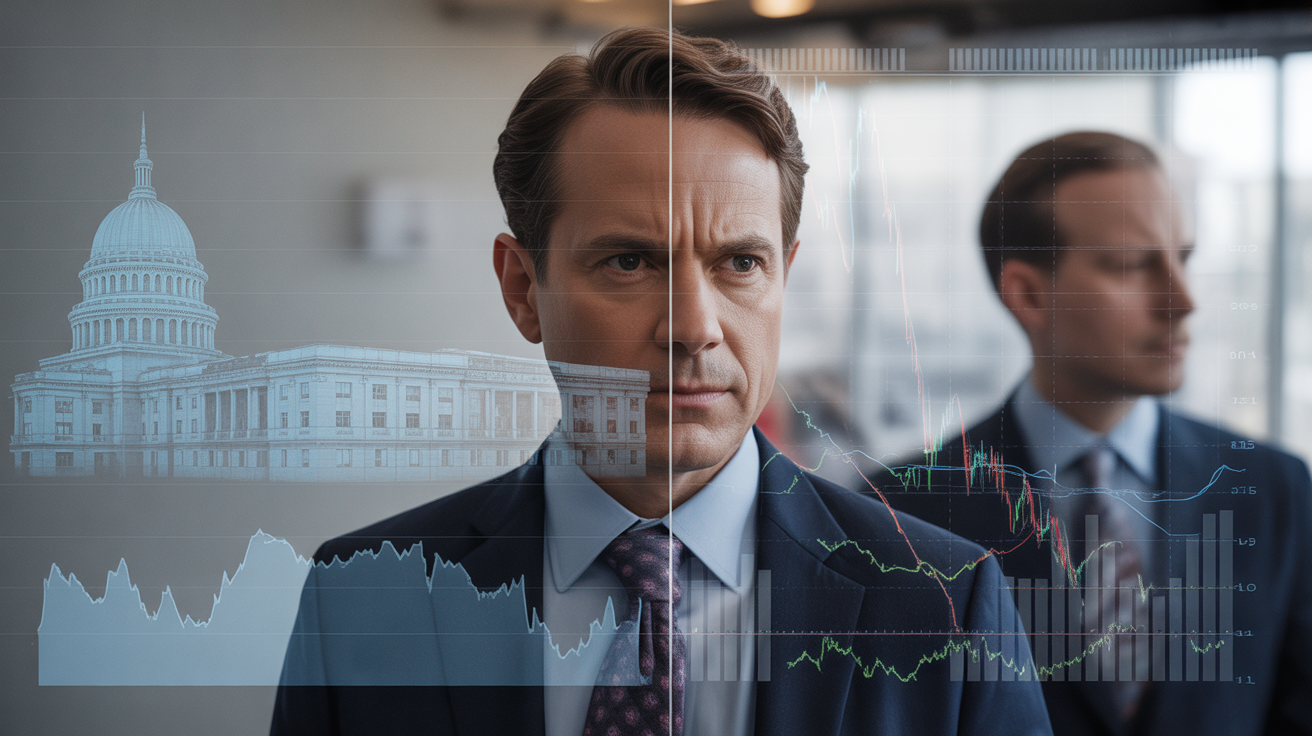
It was one of those mornings where the news alert hits your phone before the coffee is even done. Washington was at it again. Another funding deadline missed. Another government shutdown. If you were an investor in early 2025, you probably remember the feeling well. A mix of déjà vu and unease, with a dash of “not this again.” The markets had already been wobbling on inflation fears and geopolitical tension, and suddenly the world’s largest economy was voluntarily stepping on the brakes.
Government shutdowns used to feel like distant political theater. Important, sure, but abstract. In 2025, they felt personal. Portfolios moved. Volatility spiked. Confidence cracked, even if only briefly. What made this shutdown different was not just its timing but what it revealed about how modern markets digest political dysfunction in real time.
This article digs into what the 2025 shutdown taught us about markets, investor behavior, risk, and opportunity. Not as a dry recap of events, but as a practical, street-level look at how money actually moved and what real people experienced. If you manage investments, plan your own finances, or simply like to understand the forces shaping your savings, these lessons are worth keeping close.
A Quick Walk Back to the 2025 Shutdown
By the time lawmakers failed to pass a funding bill in the first quarter of 2025, most traders had already priced in a high chance of disruption. The rhetoric was familiar. Hard deadlines. Late-night negotiations. Public finger-pointing. And then, right on schedule, parts of the federal government went dark.
Hundreds of thousands of federal workers were furloughed. Key agencies slowed to a crawl. Economic data releases were delayed or suspended. Markets hate uncertainty, but they really hate not knowing what they are supposed to know. Investors were suddenly flying with half the instruments covered.
The initial market reaction was sharp and emotional. Stocks sold off over several sessions. The VIX jumped. Safe-haven assets caught a bid. But just as in previous shutdowns, that first shock did not tell the whole story. The second act was where the real lessons emerged.
How Markets Actually Reacted, Not How We Expected
In theory, a government shutdown is bad for markets. Reduced spending, delayed payments, shaken confidence. In practice, 2025 showed once again that markets are more nuanced than the headlines.
The first few days looked ugly. Broad indexes slipped. Financial media filled the air with red screens and grim commentary. Retail investors started asking the usual questions: Should I sell? Is this the beginning of something much worse?
Then something interesting happened. The selling pressure eased. Certain sectors stabilized. And within weeks of the shutdown ending, many of the major indexes had clawed back their losses. Not all stocks recovered equally, but the doomsday scenario never quite arrived.
This pattern reinforced a hard truth about markets. They are emotional in the short term, but pragmatic in the longer view. Shutdowns are disruptive, yet temporary. Investors who panic often pay a higher price than those who stay calm.
The Data We Missed and Why It Mattered
One of the most underappreciated impacts of the 2025 shutdown was the data blackout. No GDP print. No employment report. Delayed inflation numbers. For macro traders and portfolio managers, that was like trying to drive in a snowstorm with the headlights off.
In normal times, these data points shape expectations for interest rates, earnings growth, and economic momentum. Without them, the market had to lean more heavily on alternative indicators. Private payroll firms. Credit card spending data. Freight volumes. Even satellite imagery of industrial activity started showing up in research notes.
This forced adaptation showed both the resilience and the fragility of modern financial systems. On one hand, markets proved they could function without official data for a while. On the other, it became painfully clear how much confidence rests on government-produced information that most people take for granted.
Sector Winners and Losers in the 2025 Shutdown
Not all industries experienced the shutdown the same way. Some took an immediate hit. Others quietly benefited from the chaos.
Here is a simple snapshot of how key sectors tended to perform during and shortly after the shutdown:
| Sector | Typical Reaction During Shutdown | Post-Shutdown Trend |
|---|---|---|
| Defense and aerospace | Mild volatility, delayed contracts | Quick rebound |
| Consumer staples | Relative strength | Steady gains |
| Technology | Initial sell-off | Strong recovery |
| Financials | Pressure from uncertainty | Mixed results |
| Travel and tourism | Short-term decline | Gradual normalization |
Defense contractors felt the pinch almost immediately. Delayed payments and contract uncertainty weighed on shares, even though long-term demand was never really in question. Consumer staples, on the other hand, behaved like the boring but reliable friend you call when things get messy. Food, household goods, and basic necessities kept moving regardless of what Congress was doing.
Technology stocks were a classic example of short-term fear meeting long-term optimism. They dipped during the panic but bounced back strongly once it became clear that the shutdown would not derail the broader innovation cycle.
The Human Side of a Market Event
It is easy to talk about shutdowns in terms of charts and tickers, but 2025 put real human stories front and center. A federal employee in Maryland wondering how to pay the mortgage after missing a paycheck. A small business owner waiting on a delayed permit. A contractor unsure when an invoice would be processed.
These personal stresses ripple into markets in subtle ways. Consumers cut back on spending. Credit card balances rise. Loan delinquencies tick higher. None of this shows up instantly, but it builds quietly beneath the surface.
I spoke with an investor during that period who had built a conservative portfolio specifically to avoid drama. When the shutdown hit, he expected his bonds to cushion the blow. Instead, short-term Treasurys barely moved, and his equity holdings dipped more than he expected. He told me later that the experience changed how he thought about “safe” assets. Safety, he realized, is always relative.
Shutdowns and the Bond Market
If stocks give you the headlines, bonds often tell you the deeper story. The 2025 shutdown was no exception.
At first, yields fell as investors sought safety. Treasurys caught a bid, especially on the short end of the curve. This might sound strange at first. After all, the shutdown involved the very issuer of those bonds. But history has taught investors that political dysfunction does not usually translate into actual default risk, at least not in the near term.
Still, the longer the shutdown dragged on, the more nervous the bond market became. Liquidity thinned. Bid-ask spreads widened. Money market funds faced operational headaches as government payments stalled.
By the time funding was restored, the bond market had delivered a quiet warning. Confidence is deep, but not limitless. Push the system often enough and even the calmest corner of finance starts to twitch.
Currency Markets and America’s Reputation
The US dollar has long enjoyed a unique status as the world’s reserve currency. Government shutdowns poke at that reputation, even if they do not topple it.
In 2025, the dollar weakened modestly during the height of the shutdown. Not a collapse, not even a sharp move by historical standards, but enough to catch the attention of global investors. Currency traders are specialists in political risk. They live on uncertainty. They were watching Washington closely, and they were not impressed.
What mattered more than the immediate price action was the narrative. Each shutdown, each debt ceiling standoff, quietly chips away at the idea of the United States as a flawlessly reliable financial anchor. That does not change things overnight. It changes them inch by inch.
Volatility as Both Villain and Opportunity
If you lived through the 2025 shutdown as an active investor, you probably remember the volatility. Some days it felt like the market had the jitters. Other days it shrugged the whole thing off.
For traders, this environment was a gift and a curse. Short-term swings created opportunities to buy dips and sell rallies. Options premiums rose, rewarding those who knew how to manage risk. At the same time, whipsaw price action punished anyone who chased moves without a plan.
One trader told me he made his best quarter of the year during the shutdown. Another said it was his worst. Same market. Different discipline. That contrast is one of the clearest lessons from 2025. Volatility does not care about your intentions. It rewards preparation and exposes recklessness.
The Psychological Game Investors Had to Play
More than anything else, the shutdown tested nerves.
Behavioral finance teaches us that uncertainty amplifies emotional decision-making. In 2025, you could see it in real time. Social media filled with dire predictions. Television commentators debated whether this time was different. Friends texted friends asking what they should do with their money.
Some investors sold just to feel in control. Others doubled down aggressively, convinced they were buying the bargain of the decade. Most hovered somewhere in the middle, tempted by action but paralyzed by doubt.
Those who fared best were not necessarily the smartest or the fastest. They were the most patient. They remembered past shutdowns. They recalled that markets have a long memory for recovery and a short memory for political drama.
What 2025 Taught Us About Risk
Risk is easy to talk about in theory. Harder to live through when your screen is flashing red.
The 2025 shutdown underscored several hard truths about modern financial risk:
First, political risk is not an abstract concept. It is a real input into asset pricing. Ignore it at your own peril.
Second, diversification still works, but it does not make you immune. Many balanced portfolios fell during the shutdown. They simply fell less.
Third, liquidity matters more than most people think. Assets you cannot easily sell become far more stressful during a crisis, even a temporary one.
Finally, time horizon is everything. A trader looking at minutes and hours experiences a shutdown far differently than a retirement investor looking at decades.
Opportunities Hidden in the Noise
It is easy to view shutdowns only through the lens of danger. That misses half the picture. Political disruptions often create mispricings. Fear overshoots reality. Good companies get dragged down with bad headlines.
In 2025, several long-term investors quietly went shopping during the sell-off. They focused on high-quality businesses with strong balance sheets and diverse revenue streams. Companies that were unlikely to be permanently harmed by a few weeks of political chaos.
Months later, many of those positions were sitting on healthy gains. The investors who bought them were not immune to doubt at the time. They simply chose to act despite it.
Opportunity, as 2025 reminded us, rarely comes wrapped in comfort.
Lessons for Long-Term Investors
If you stripped away the noise of the 2025 shutdown and focused on what truly mattered, a few enduring lessons stood out.
One, markets have short memories. The pain feels intense in the moment, but it fades faster than most expect.
Two, political dysfunction is becoming a recurring risk, not a rare event. Investors should plan for it the way they plan for inflation or rate changes.
Three, quality still matters. Companies with resilient cash flows, low debt, and global reach weathered the storm far better than speculative names.
Four, staying invested beats trying to time every political twist and turn. Many who sold at the bottom struggled to get back in when prices rebounded.
What Active Traders Learned the Hard Way
Active traders faced a very different set of lessons.
Stops mattered more than ever. News flowed unpredictably, often outside of market hours. Gaps were common. Overleveraged positions were punished swiftly.
Correlation also shifted in confusing ways. Assets that usually moved together suddenly diverged. Old patterns failed. New ones emerged and then vanished.
For those willing to adapt, 2025 was a master class in flexibility. For those stuck in rigid strategies, it was an expensive reminder that markets do not owe anyone consistency.
The Role of Central Banks During Political Dysfunction
One of the quiet stabilizers during the shutdown was the central bank. While it could not fix political deadlock, its messaging helped anchor expectations.
By emphasizing its commitment to financial stability, it reduced the risk of panic spreading from equity markets into credit markets. Liquidity facilities were ready. Communication lines stayed open.
This highlighted an important point. In the modern financial world, central banks often serve as the shock absorbers of last resort. Their power is not unlimited, but their influence is real.
How International Investors Viewed the 2025 Shutdown
From overseas, the 2025 shutdown looked both familiar and perplexing. Many global investors were unfazed. They had seen this movie before. Others were less forgiving.
Some emerging market funds trimmed US exposure, citing governance risk. European pension managers asked sharper questions about long-term fiscal stability. None of this caused immediate upheaval, but it added to a slow accumulation of doubt.
Trust erodes quietly. One shutdown rarely changes the world. A pattern of them can.
Practical Strategies for the Next Shutdown
Because there will almost certainly be a next one, it is worth translating the lessons of 2025 into practical steps.
First, build a volatility plan before you need it. Decide in advance how much drawdown you can tolerate without changing your strategy.
Second, keep cash available. Not as a permanent position, but as dry powder. Opportunity favors those who can act.
Third, review your exposure to government-dependent industries. Contracts, reimbursements, and permits can all freeze during a shutdown.
Fourth, avoid emotional overtrading. Set rules. Follow them. The market will test your discipline when headlines turn ugly.
Fifth, stay informed but not consumed. Panicked news rarely makes for sound investment decisions.
The Shutdown as a Stress Test
In hindsight, the 2025 shutdown functioned as a stress test for the financial system. It tested liquidity, confidence, and infrastructure.
The system passed, but not without some cracks. Delayed data exposed vulnerabilities. Payment backlogs created localized strain. Investor confidence wobbled.
Stress tests are valuable not because they predict disaster, but because they reveal weak points before disaster strikes. In that sense, 2025 gave policymakers and market participants plenty to think about.
A Table of Key Market Takeaways from 2025
To summarize the major market lessons in a simple way:
| Market Area | Key Lesson from 2025 |
|---|---|
| Equities | Political shocks cause short-term pain, not permanent damage |
| Bonds | Safe-haven status holds, but confidence is not infinite |
| Volatility | Rewards preparation, punishes emotion |
| Data | Markets depend more on official data than they realize |
| Investor behavior | Patience consistently beats panic |
What Could Be Different Next Time
No two shutdowns are identical. The next one may unfold in a different macro environment. Higher debt levels. Slower growth. Faster capital flows. New geopolitical pressures.
Technology will also play a bigger role. Algorithmic trading now reacts to political headlines in milliseconds. Social media amplifies fear faster than any cable network ever could. The next shutdown may play out at a higher emotional frequency than 2025 did.
What will likely remain the same is human nature. Fear, greed, hope, and regret do not age out of the market.
Personal Reflections from the 2025 Episode
As someone who has covered markets for decades, the 2025 shutdown felt both familiar and subtly unsettling. Familiar because I had seen similar patterns before. Unsettling because each repetition feels a little less harmless.
I watched seasoned professionals second-guess themselves. I watched newcomers learn painful lessons quickly. I watched markets shake off bad news with a resilience that bordered on indifference.
What stayed with me most was not the index levels or the yield curves. It was the quiet conversations with investors who realized, once again, that certainty is an illusion. All we ever really manage is risk.
Actionable Takeaways for Everyday Investors
If you take nothing else from the experience of 2025, take these practical insights:
Do not anchor your entire financial plan to political stability. Build portfolios that can survive dysfunction.
Resist the urge to react to every headline. The news cycle is designed to provoke emotion, not to protect your capital.
Use market fear as a diagnostic tool. Ask why prices are falling. Distinguish between temporary disruption and permanent impairment.
Rebalance when others panic. It feels counterintuitive, but it works more often than not.
Keep learning. Each shutdown, each crisis, adds to your market education if you let it.
A Realistic but Optimistic Conclusion
Government shutdowns are messy, uncomfortable, and unnecessary. From a civic perspective, they shake confidence. From a market perspective, they inject volatility where none is needed. The 2025 shutdown was no exception.
Yet, it also reinforced a quieter truth. Markets are remarkably resilient. Investors adapt. Systems bend without always breaking. Fear flares, then fades.
For those who kept their heads in 2025, the experience ultimately became another chapter in the long story of market survival. For those who panicked, it was a costly reminder that reacting emotionally to political theater often hurts more than it helps.
Looking ahead, shutdowns will likely remain part of the American political landscape. Investors do not get to vote them away. What they do get to control is their own preparation, discipline, and perspective.
And that is the real lesson of 2025. You cannot control the headlines, but you can control how you respond to them. Over the long run, that response makes all the difference between being shaken by the market and growing with it.