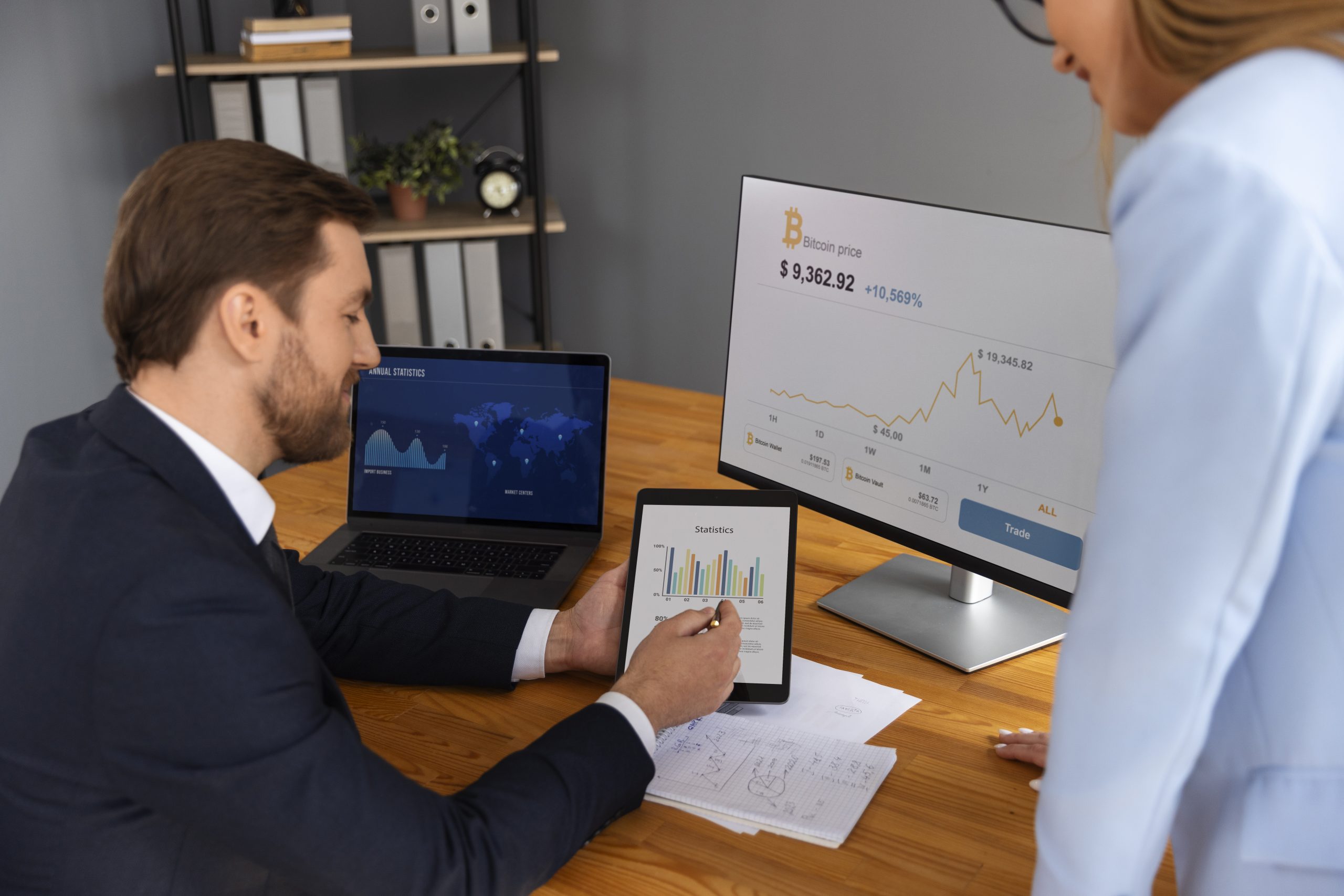
A few years ago, my barber leaned over mid-haircut and said, “I made more money yesterday than I did all week cutting hair.” He wasn’t joking. He had just discovered copy trading. No finance degree. No Bloomberg terminal. Just a smartphone, a trading app, and a few taps that let him mirror the moves of someone halfway across the world.
That moment stuck with me. Not because everyone should suddenly start trading, but because it captured something bigger that has swept through modern markets. Investing, once guarded by gatekeepers and expensive advisors, has gone social, immediate, and strangely personal. You do not just buy assets anymore. You follow people.
Copy trading sits right at the center of this shift. It promises what many investors secretly crave: access to professional strategies without the years of grinding through charts, earnings calls, and economic reports. In real time, with real money on the line.
But is it really that simple? Is it smart to follow a stranger with your savings just because their performance chart looks good? Why has copy trading exploded now, and what does it get right, and dangerously wrong?
Let’s unpack it.
What Copy Trading Really Is (Beyond the Marketing Pitch)
At its core, copy trading allows you to automatically mirror the trades of another investor. When they buy a stock, cryptocurrency, or currency pair, your account executes the same trade. Same entry, same exit, scaled to your capital.
It sounds almost too neat. And in a way, it is. But the idea is not new.
Long before apps and algorithms, investors followed “star managers.” Think of the legendary hedge fund names whispered on trading floors. Copy trading simply digitized that behavior and made it accessible to anyone with a phone.
The difference now is speed and visibility. You see:
-
The trader’s performance history
-
Their current open positions
-
Their risk profile
-
Their drawdowns and win rates
All of it, updated in real time.
You are not just trusting a glossy brochure. You are watching their decisions unfold tick by tick.
For many newer investors, that is intoxicating. No more staring at charts late at night wondering whether to buy or sell. You tap “copy,” set your budget, and the platform does the rest. It feels like hiring a professional at a discount.
But markets have a way of humbling shortcuts.
Why Copy Trading Took Off When It Did
Timing matters in finance. Copy trading did not explode in a vacuum. It arrived at the perfect crossroads of technology, culture, and market behavior.
First, smartphones changed everything. Trading is no longer tied to a desk or a trading floor. It fits in your pocket. Add push notifications, and suddenly you feel plugged into the market’s heartbeat.
Second, social media reshaped the way people learn. We now follow chefs, fitness trainers, and travel vloggers. Why not traders? Copy trading borrows that same logic. Follow the expert. Copy their moves. Learn by watching.
Third, the post-2020 trading boom created a new generation of retail investors. Locked-down millions opened brokerage accounts for the first time. Some struck gold. Many did not. But the appetite for faster, easier ways to participate never faded.
Add volatile markets, from meme stocks to crypto manias, and the appeal becomes obvious. When chaos rules, people look for leaders. Copy trading offers a simple narrative. Someone out there knows what they are doing. Why not ride along?
How It Works in Practice: A Day in the Life of a Copy Trader
Let’s make this real.
Imagine Sarah, a 34-year-old marketing manager. She has some savings but no time to study markets. She hears about copy trading from a colleague who boasts about doubling his small crypto account. Curious, she downloads a platform, browses trader profiles, and finds a woman with a steady three-year track record trading major currencies.
Sarah allocates $5,000 and clicks “copy.”
The next morning, the trader buys the euro against the dollar. Sarah’s account does the same within seconds. Later that day, the position closes at a small profit. Sarah sees green numbers where yesterday there were none. It feels good. Reassuring, even.
A week later, the trader hits a losing streak. Three trades in a row go against them. Sarah’s account turns red. She starts opening the app more often, watching every swing. The emotional ride begins.
This is the lived reality of copy trading. You are not making decisions, but you are still emotionally exposed to every one of them.
That emotional distance, or lack of it, often determines whether people succeed or panic at exactly the wrong time.
The Different Flavors of Copy Trading
Not all copy trading works the same way. The term gets thrown around loosely, but there are important differences beneath the surface.
Here is a simple snapshot of the main approaches:
| Type of Copy Trading | How It Works | Best For | Key Risk |
|---|---|---|---|
| Manual Copy | You enter trades based on another trader’s signals | Hands-on learners | Delays, execution errors |
| Automatic Copy | Trades are mirrored instantly | Passive investors | Blind reliance |
| Social Trading | Mix of copying and discussion | Community-driven traders | Herd behavior |
| Strategy Copy | Copy a predefined algorithm or portfolio | Long-term investors | Over-optimization |
Automatic copy trading is the most popular today. It is also the most dangerous if misused because it creates the illusion that risk has been outsourced. It has not.
The Upside: Why So Many People Are Drawn to Copy Trading
Despite the warnings, copy trading is not a gimmick. There are solid reasons why millions of users worldwide have embraced it.
Access to Experience You Do Not Yet Have
You can follow traders with years of market exposure. People who have lived through crashes, bubbles, and everything in between. That experience is hard to replicate quickly on your own.
Learning by Watching, Not Just Reading
Textbooks teach theory. Copy trading shows you decision-making in motion. When does a trader cut losses? When do they pyramid gains? How long do they hold winners?
Over time, patterns emerge. Good copy traders often become better independent traders simply by observing these habits.
Time Efficiency
Not everyone wants to spend their evenings analyzing charts. Copy trading turns investing into something closer to autopilot. For busy professionals, that alone is a powerful draw.
Psychological Relief
Decision fatigue is real. Copy trading removes thousands of micro-decisions. You are no longer asking, “Should I buy now?” You are asking, “Do I trust this person?” That is a simpler, if not always safer, question.
The Hidden Risks That Rarely Make It Into the Ads
Now for the harder truths. Copy trading does not eliminate risk. In some cases, it amplifies it.
Past Performance Is a Polished Illusion
Traders with flashy returns often took massive risks to get there. A 200 percent annual gain looks dazzling until you realize it came with 70 percent drawdowns along the way.
Performance charts do not show the sleepless nights, the near blow-ups, or the lucky escapes.
The Crowded Trade Problem
When thousands of users copy the same trader, their collective capital can influence the market reaction, especially in smaller or less liquid assets. Everyone piles in together. Everyone rushes for the exit together. That can turn a manageable loss into a stampede.
Style Drift
Some traders behave conservatively while building a following. Once they have a large base of copiers, incentives can shift. Higher risk can mean higher short-term returns and more attention. The strategy you signed up for can quietly change.
Emotional Contagion
Fear and greed spread fast. When a popular trader hits a rough patch, platforms often light up with panic. Comments get ugly. People abandon strategies at the worst possible time, locking in losses they might have recovered from.
The Ethics and Incentives Behind the Scenes
One piece that many copy traders overlook is the incentive structure.
On many platforms, top traders earn not just from their own trading but also from follower fees or profit-sharing. That changes behavior in subtle ways. The trader is no longer only managing their own risk. They are also managing their personal brand.
This is not inherently bad. Many professionals act responsibly. But it does mean their goals might not perfectly align with yours.
You want steady, compounding returns. They might want visibility, ranking, and growth in follower count. Sometimes those goals clash.
This dynamic is eerily similar to the world of fund managers and star stock pickers. The difference is that copy trading compresses everything into a public, real-time spectacle.
Copy Trading in Stocks vs Forex vs Crypto
Markets are not interchangeable. Copy trading behaves very differently depending on what is being traded.
Stocks
Stock-focused copy traders often hold positions longer. Days, weeks, sometimes months. The risk profile tends to be steadier, though earnings surprises and macro shocks can still cause violent swings.
Forex
Currency trading is fast, leveraged, and unforgiving. Copy traders in this space can generate frequent small wins punctuated by sharp drawdowns. It demands tight risk control and iron discipline. Many do not have both.
Cryptocurrencies
This is the wild west of copy trading. Explosive upside, brutal crashes, and a news cycle that can move prices by double digits in minutes. Crypto copy traders can make fortunes in bull phases and lose everything when the tide turns.
The asset class you choose to copy matters just as much as the person you copy.
A Market Story: Following Too Closely Into the Storm
In late 2021, during the peak of the crypto mania, copy trading platforms were flooded with traders who had never seen a real bear market. Returns were eye-popping. Ten percent days felt normal. Everyone felt like a genius.
One popular trader I followed out of journalistic curiosity had tens of thousands of copiers. He was aggressive. Leverage on leverage. It worked beautifully until it did not.
When prices finally cracked, his positions unwound in hours. Stop losses slipped. Liquidations followed. His account survived barely. Many followers did not.
The comments section turned into a digital town square of shock, anger, and disbelief. People were not just losing money. They were losing trust in the idea that someone else had it all figured out.
That episode taught me something simple and brutal. Copy trading can transfer the mechanics of trading, but it cannot transfer responsibility. That always stays with you.
How to Choose a Trader Without Falling for the Hype
If you are going to copy, choose with care. This is where most people go wrong.
First, ignore the biggest returns. Look instead for consistency. A trader who makes 20 to 30 percent a year with moderate drawdowns often beats the one who doubles an account and then implodes.
Second, study the drawdown history. How deep are the worst losses? How long did recovery take? Shallow losses recovered quickly tell a very different story than deep holes that linger for months.
Third, watch how they behave during stress. Do they cut losses or double down? Do they communicate clearly, or do they disappear when trades go bad?
Finally, diversify your copying just as you would diversify your own portfolio. Following one trader is a single point of failure. Two or three with different styles can smooth the ride.
Copy Trading as Education, Not Just Execution
The smartest users do not treat copy trading as a black box. They treat it as a classroom.
They ask:
-
Why did this trader enter here?
-
What news or technical level might they be reacting to?
-
Why did they exit now?
Over time, these questions build intuition. You begin to see price action not as random noise but as a conversation between buyers and sellers.
This is where copy trading shines brightest. Not as a magic money machine, but as a bridge between theory and practice.
I have met traders who started as copiers and later graduated to running their own strategies. They did not just follow. They studied the following.
The Role of Algorithms in Modern Copy Trading
Increasingly, human traders are competing with algorithmic strategies on copy trading platforms. These are systems that trade based on predefined rules. No emotions, no hesitation.
Algorithms bring discipline. They never chase losses out of revenge. They never get overconfident after a winning streak. But they have weaknesses too. They break when market conditions shift beyond what they were designed for.
Many platforms now blur the line between copying a person and copying a system. For users, this raises a deeper question. Do you trust human judgment or machine consistency more?
There is no universal answer. Some of the best results come from combining both in small doses.
Regulation, Transparency, and the Trust Issue
Copy trading sits in a gray zone between investing, asset management, and social media. Regulation varies widely by region.
Some platforms operate under strict financial oversight, with clear disclosure rules and client protections. Others function in looser environments where transparency is more a promise than a guarantee.
For users, this means due diligence extends beyond individual traders. The platform itself matters. How are client funds held? What happens if the platform fails? How transparent are performance statistics?
These questions are not glamorous, but they are essential. In markets, boring questions often save the most money.
Can Copy Trading Fit Into a Serious Long-Term Strategy?
This is where opinions diverge.
For pure long-term investors focused on building wealth slowly through diversified portfolios, copy trading can feel too noisy. Too reactive. Too dependent on someone else’s daily decisions.
Yet, as a satellite strategy, it can make sense. A small allocation alongside more traditional investments. A learning tool. A way to stay engaged with market dynamics without risking the core of your capital.
The danger comes when copy trading becomes the entire plan. When someone bets what they cannot afford to lose on the hope that a stranger will keep winning.
Markets rarely reward that kind of faith.
Practical Ground Rules for Would-Be Copy Traders
If you are considering copy trading, here are a few principles that have held up across cycles and markets.
Start with money you can truly afford to lose. Test the waters emotionally before you test them financially.
Set a clear risk limit. Decide in advance how much drawdown you will tolerate before stopping. And respect that limit.
Check performance over multiple market conditions. A strategy that only works in bull markets is not a strategy. It is a fair-weather friend.
Resist the urge to intervene constantly. Switching traders after every losing streak is the fastest way to compound losses.
And most importantly, stay curious. Treat every copied trade as a lesson, not just a line on a performance chart.
The Psychological Tightrope: Control Without Control
One of the strangest aspects of copy trading is the illusion of control. You feel involved because you see every trade. Yet you are not making the decisions.
This creates a unique tension. When things go well, you feel smart for choosing the right trader. When things go poorly, frustration builds because you cannot change the outcome in real time.
Some people handle this psychological gray area well. Others find it maddening. They oscillate between detachment and micromanagement, often with poor results.
Knowing your own temperament is as important as analyzing any trader’s statistics.
The Bigger Picture: What Copy Trading Says About Modern Finance
Zoom out for a moment, and copy trading tells a larger story about our financial culture.
We live in an age that prizes speed, access, and transparency. We want to see everything. We want it now. And we want to feel connected to expertise without the slow grind required to earn it ourselves.
Copy trading fits that mindset perfectly. It is finance in the age of feeds, followers, and frictionless execution.
But markets have not changed their fundamental nature. They remain uncertain, cyclical, and often indifferent to human hopes. Copy trading may reshape how people participate, but it does not rewrite the basic rules of risk and reward.
Opportunities, Risks, and the Space Between
It would be easy to label copy trading as either a brilliant innovation or a dangerous crutch. The truth, as always in finance, lives somewhere in the middle.
The opportunity is real. Lower barriers, greater transparency, shared knowledge, and the chance for everyday investors to learn by doing.
The risk is equally real. Overconfidence, herd behavior, platform failures, misaligned incentives, and the timeless temptation to believe that someone else has found a shortcut around uncertainty.
Copy trading amplifies both sides. It can accelerate progress just as quickly as it can accelerate mistakes.
A Few Final Thoughts From the Trading Floor
After years of watching markets, one pattern keeps repeating. Tools change. Platforms evolve. Strategies rise and fall. But human behavior remains stubbornly familiar.
Greed still whispers. Fear still shouts. Hope still clouds judgment. Copy trading does not erase these forces. It simply gives them a new stage.
For some, it will be a stepping stone that builds confidence and skill. For others, it will be an expensive lesson in delegation without understanding. Both outcomes are part of the same story.
Conclusion: Following the Pros Without Losing Yourself
Copy trading is neither a miracle nor a menace. It is a reflection of where finance stands today. Open, fast, social, and still unforgiving to those who underestimate it.
Following the pros in real time can be empowering. It can teach you how experienced traders think, manage risk, and navigate uncertainty. It can also tempt you into complacency, as if responsibility can be outsourced along with decision-making.
The smartest approach is balanced. Use copy trading as a tool, not a crutch. As an education, not a lottery ticket. As one part of a broader financial life, not the whole of it.
Markets reward patience, humility, and preparation far more consistently than they reward shortcuts. Copy trading may let you walk alongside professionals. But in the end, every investor still walks their own path.
And that, perhaps, is the most honest promise the market ever makes.