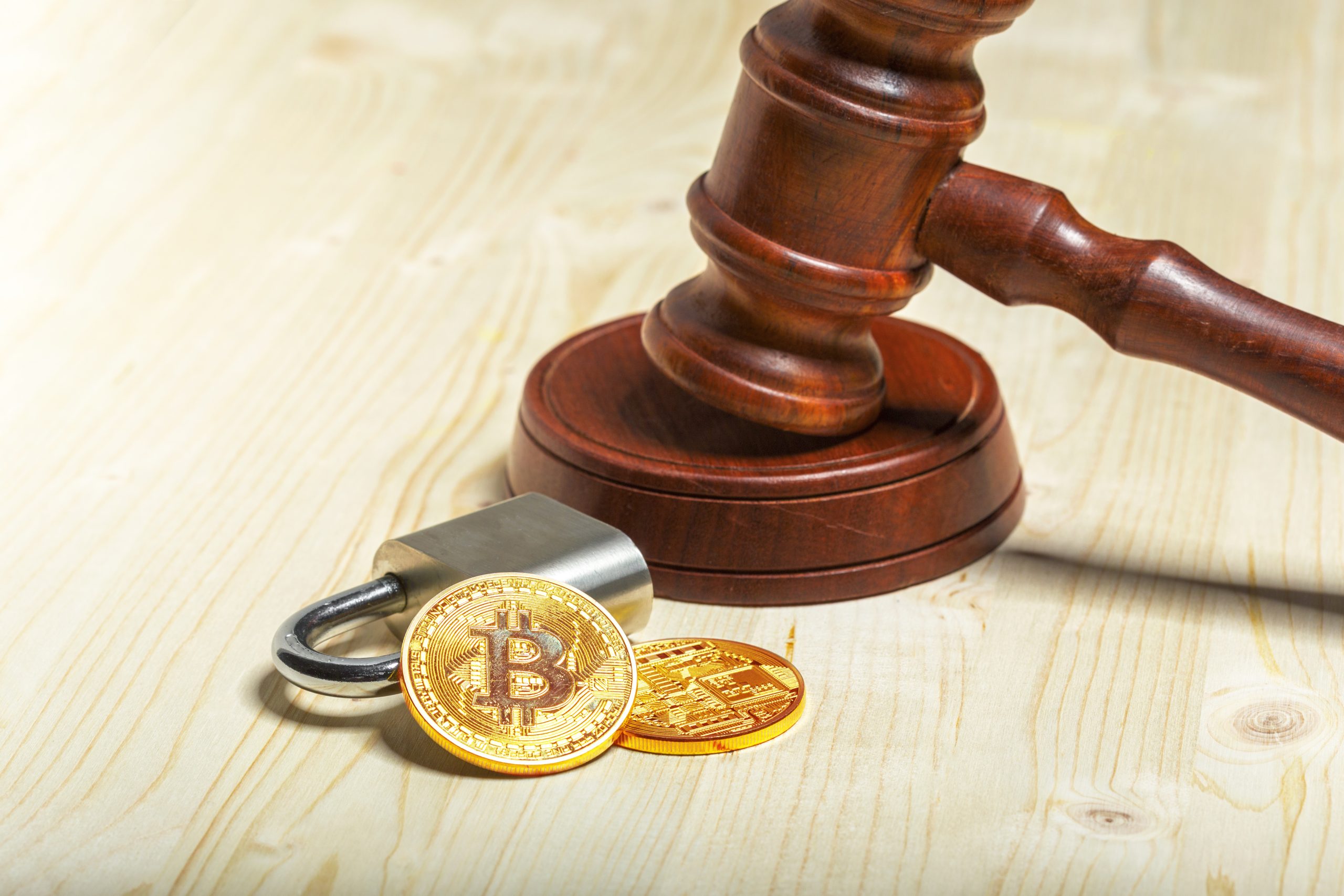
If you have been anywhere near the crypto markets over the past few years, you already know how quickly the mood can swing. One day it is champagne and laser eyes. The next it is panic, margin calls, and angry posts on social media. Lately, though, there has been a different force shaping sentiment. Not another meme coin. Not a celebrity tweet. Regulation.
For a long time, crypto lived in a regulatory gray zone. That freedom fueled explosive growth, wild innovation, and more than a few spectacular disasters. But those days are fading fast. Governments across the world are now rolling out detailed crypto laws with real teeth. Some investors welcome the change. Others fear it will smother the very spirit that made crypto what it is.
So what do these new laws actually mean for the market? Are they a death knell for crypto’s wild-west era, or the foundation for its next major boom? Let’s dig into the real story behind the rules, the market reaction so far, and what it all means for anyone with skin in the game.
The Shift From “Hands-Off” to Hard Rules
For years, regulators mostly watched crypto from a distance. It was too small to matter, too complex to rush into, and in some regions, politically inconvenient to touch. That changed the moment billions of dollars started to move through exchanges every day. It changed again when retail investors poured in during the pandemic. And it really changed after a series of collapses that wiped out life savings and made lawmakers look negligent.
I still remember the week a major exchange went under. Markets froze. Traders could not pull their funds. Group chats were chaos. Some people lost more money in three days than they had made in ten years. Within weeks, regulators who had been debating for half a decade suddenly found urgency.
The message was clear. Crypto was no longer a side show. It was now a financial system that could hurt ordinary people. And when that happens, regulation is no longer optional.
Today, we are seeing formal frameworks replace vague guidance. These are not just press releases or soft warnings. They are detailed rulebooks that define what is legal, what is not, and who is responsible when things go wrong.
A Quick Tour of the New Regulatory Landscape
Crypto regulation is not uniform. Every region is moving at its own pace and with its own priorities. Still, some clear themes have emerged.
United States
The United States has taken a tough enforcement-first approach. Instead of a single comprehensive crypto law, regulators rely on existing securities and commodities rules. This has led to years of courtroom battles over one basic question. Is a token a security or not?
The Securities and Exchange Commission has targeted exchanges, token issuers, staking products, and even stablecoins. At the same time, proposed legislation in Congress aims to finally clarify which regulator oversees what. The Commodity Futures Trading Commission wants a bigger role. Lawmakers want to reduce confusion. The industry wants certainty.
But for now, the U.S. remains one of the most aggressive jurisdictions when it comes to enforcement actions.
European Union
Europe took a different path. Instead of fighting each case in court, the EU created a single unified framework known as the Markets in Crypto Assets regulation, often shortened to MiCA. This law sets out clear rules for exchanges, stablecoin issuers, wallet providers, and token projects across all member states.
For many crypto firms, this is a welcome change. Comply in one country, and you can operate across the entire bloc. The trade-off is heavy compliance requirements, capital rules, and strict marketing standards.
Asia and Other Key Markets
Asia is a mixed bag. Japan has long been one of the most tightly regulated crypto markets, with strict custody and reporting rules. Singapore once positioned itself as a crypto hub but has since tightened requirements after several high-profile failures. Hong Kong is reopening its doors under a controlled licensing system.
Elsewhere, countries like the United Arab Emirates and parts of Latin America are racing to attract crypto firms with clearer, friendlier frameworks.
What this tells us is simple. Regulation is not about banning crypto. It is about choosing what kind of crypto industry each region wants.
What Are Regulators Actually Trying to Fix?
From the outside, it can look like regulators simply dislike crypto. The reality is more practical.
They are reacting to very specific problems that have repeated themselves over and over again.
First, there is the issue of consumer protection. People bought tokens without understanding the risks. They left funds on unregulated exchanges. When those platforms failed, there was no safety net.
Second, there is market integrity. Wash trading, fake volumes, insider dealing, and price manipulation have all been common in crypto. In traditional finance, these practices are tightly policed.
Third, there is financial crime. Money laundering, sanctions evasion, and fraud schemes thrive in opaque systems.
Finally, there is systemic risk. Stablecoins grew large enough that their failure could ripple through wider markets. When one major stablecoin broke its dollar peg, it triggered a chain reaction that shook the entire sector.
New laws target each of these problems directly. They introduce licensing, audits, capital requirements, customer verification, and clear accountability for management teams.
Immediate Market Reactions: Fear, Then Adjustment
Markets hate uncertainty. For years, crypto investors worried constantly about what regulators might do. Each rumor sent prices swinging. Each new enforcement case triggered sell-offs.
But something interesting happened once formal laws started to appear.
At first, there was fear. Tokens tied to exchanges or DeFi protocols dropped sharply. Stocks of publicly listed crypto companies slid. Venture funding slowed.
Then, gradually, a different tone emerged. Many institutional investors, who had stayed on the sidelines for years, began to re-engage. They did not love regulation, but they needed it. Without clear rules, they simply could not justify large allocations.
One fund manager told me during a quiet lunch in London, “I do not need crypto to be free. I need it to be predictable.”
That mindset is now spreading.
A Simple Snapshot of Key Regulatory Approaches
| Region | Regulatory Style | Business Impact | Investor Impact |
|---|---|---|---|
| United States | Enforcement-driven | High legal risk, uneven | Volatility around news |
| European Union | Unified licensing model | Predictable compliance | Greater institutional trust |
| Japan | Strict but clear | High compliance costs | Strong consumer protection |
| Singapore | Selective tightening | Fewer licenses issued | Reduced counterparty risk |
| UAE | Pro-innovation framework | Growing crypto hub status | Rising global participation |
This table barely scratches the surface, but it highlights one key point. Regulation is reshaping where crypto businesses choose to operate and where capital feels safest.
Stablecoins: The Regulatory Battleground
If there is one corner of the crypto market that has regulators’ full attention, it is stablecoins.
These tokens promise price stability by being tied to traditional currencies like the U.S. dollar. They are used for trading, payments, and as a bridge between crypto and traditional finance. At their peak, stablecoins settled trillions of dollars in transactions annually.
Regulators worry because many stablecoins operate like unregulated banks. They take deposits, invest reserves, and promise redeemability without offering the same protections as insured banks.
New laws now demand that issuers hold high-quality reserves, submit to regular audits, and maintain strict governance standards. Some countries even restrict who can issue them at all.
For the market, this is a double-edged sword. On one hand, weaker or opaque stablecoins may disappear. On the other, those that survive could become trusted financial plumbing for mainstream adoption.
Exchanges Under the Microscope
Crypto exchanges sit at the heart of the ecosystem. They are where most people buy, sell, and store digital assets. They also became ground zero for regulatory scrutiny after multiple failures.
New rules now require exchanges to:
-
Segregate customer funds from company assets
-
Maintain minimum capital buffers
-
Submit to frequent audits
-
Implement strict customer verification
-
Prevent insider trading and market manipulation
For smaller exchanges, these requirements can be overwhelming. Some have shut down or merged with rivals. Larger platforms are investing hundreds of millions into compliance departments, risk systems, and legal teams.
This is already changing the competitive landscape. The cowboy days of running an exchange with a handful of developers in a cheap office are gone.
The Impact on Decentralized Finance
This is where the regulatory story gets truly complicated.
DeFi was built to operate without intermediaries. Smart contracts replace brokers and banks. Transactions run on open networks. In theory, there is no company to regulate.
In practice, regulators are now looking at the developers, the front-end interfaces, the token holders who control governance, and even the infrastructure providers.
Some DeFi projects have already restricted access in certain countries. Others are changing their governance structures. A few are moving toward partial compliance models that blend decentralization with regulatory oversight.
This raises uncomfortable questions. Can a protocol still be called decentralized if it must answer to regulators? At the same time, can DeFi attract serious capital if it remains completely unregulated?
There is no easy answer, and the market is still experimenting.
Venture Capital and Innovation in a Regulated World
A common fear is that regulation will kill innovation. There is some truth to this concern. Compliance is expensive. Legal uncertainty scares off small teams. Some startups will never get off the ground.
Yet, from a venture capital perspective, clearer rules also reduce existential risk. Investors can model regulatory costs. They can price in legal exposure. They can build sustainable companies instead of racing to cash out before a crackdown.
We are already seeing funding flow toward infrastructure, custody, compliance tech, and tokenization projects that work within existing legal frameworks. The tone has shifted from reckless growth to durable business models.
How Retail Investors Are Feeling the Shift
For everyday investors, regulation is both a relief and a frustration.
On the positive side, regulated platforms feel safer. There is better disclosure, fewer outright scams, and clearer tax reporting. The chance of waking up to a vanished exchange is lower, though never zero.
On the negative side, access is narrowing. Some high-risk tokens are no longer available in certain regions. Anonymous trading is disappearing. KYC checks are becoming universal.
For traders who value privacy and speed above all else, this feels like a betrayal. For long-term investors who value survival over thrills, it feels like progress.
Opportunities Emerging From Regulation
It is easy to focus on what regulation takes away. It is more interesting to see what it enables.
First, institutional adoption accelerates. Pension funds, insurers, and sovereign wealth funds require strict regulatory clarity before investing. Every new framework removes another barrier.
Second, mainstream payment integration becomes possible. Banks cannot touch unregulated stablecoins. With clear rules, partnerships become feasible.
Third, crypto-linked financial products such as ETFs, derivatives, and structured notes expand rapidly once regulators approve them.
Fourth, tokenization of real-world assets gains legitimacy. When laws recognize digital tokens as valid representations of equities, bonds, or property, new markets open.
In short, regulation may compress the speculative fringes but expand the core.
The Risks That Still Matter
None of this means the risks have vanished. They have simply evolved.
Regulatory overreach remains a constant threat. Poorly designed laws can stifle innovation, drive activity underground, and push businesses to less transparent jurisdictions.
There is also regulatory arbitrage. Firms may chase the weakest rulebooks, creating fragmented markets and new systemic risks.
Legal uncertainty still exists in many regions. Sudden policy shifts can wipe out business models overnight.
And of course, compliance failures remain costly. One misstep can result in massive fines, license revocations, or criminal charges.
Investors must now factor regulation into their risk assessments just as carefully as they consider technology or market cycles.
A Story From the Trading Floor
A few months ago, I met a veteran derivatives trader who had reluctantly entered the crypto market. He had avoided it for years, calling it a casino. What finally changed his mind was not a bull run. It was regulation.
His firm could finally open a regulated crypto trading desk. Custody rules were clear. Reporting standards were set. Counterparty risk was manageable.
He told me, “I still think the market is crazy, but at least now it is a crazy market with rules.”
That sentiment is becoming more common.
Practical Takeaways for Investors
If you are navigating this new regulatory era, here are a few grounded principles to keep in mind.
First, understand your local rules. Tax treatment, trading restrictions, and reporting obligations vary widely by country. Ignorance is no defense.
Second, choose regulated platforms when possible. They are not perfect, but they offer better recourse if something goes wrong.
Third, diversify across custody methods. Keeping everything on one exchange is still risky, regulated or not.
Fourth, watch stablecoin exposure. Know what backs the tokens you use and whether they comply with new standards.
Fifth, be skeptical of projects that promise to operate completely outside the law. History suggests that path ends badly for investors.
What the Next Few Years Might Look Like
The regulatory story is far from over. In fact, we are likely only at the end of the beginning.
Over the next few years, we will probably see:
-
More countries adopting comprehensive crypto frameworks
-
Greater coordination between regulators across borders
-
Tighter oversight of DeFi interfaces and governance tokens
-
Expansion of regulated crypto ETFs and structured products
-
A shakeout of undercapitalized exchanges and service providers
This will not be a smooth ride. There will be court battles, policy reversals, and political fights. Markets will react sharply to each development.
But the long-term direction is clear. Crypto is being absorbed into the global financial system rather than rejected by it.
Will Regulation Kill Crypto’s Soul?
This is the question that fuels countless late-night debates online.
There is no denying that the early days of crypto were powered by anonymity, experimentation, and a healthy dose of rebellion. Regulation changes that culture. It introduces paperwork, supervision, and compromise.
But it also introduces legitimacy. It allows crypto to scale beyond early adopters and into retirement accounts, payroll systems, and global trade finance.
The soul of crypto was never about avoiding rules for its own sake. It was about building a new kind of financial system. If that system is to endure, it must coexist with the laws of the real world.
The Market Impact So Far in One Sentence
If I had to sum it up, it would be this. Regulation has reduced short-term chaos while laying the groundwork for long-term growth.
Prices still swing wildly. Speculation is still intense. But beneath the noise, the infrastructure is becoming sturdier.
Final Thoughts: A More Grown-Up Market
Crypto is growing up. Like any transition from adolescence to adulthood, it is awkward, uncomfortable, and full of friction. The freedom of the early years is fading. The responsibilities of maturity are arriving.
For traders who thrive on chaos, this may feel like the end of an era. For investors who care about sustainability, it may mark the beginning of a much larger one.
The new laws will not eliminate risk. They will not prevent every failure. They will not stop human greed or stupidity. But they do change the game. They bring accountability into a space that desperately needed it.
If there is one optimistic truth to take away, it is this. Markets built on clearer rules tend to attract deeper capital, greater innovation, and more staying power. Crypto is finally entering that phase.
And like any market at a critical turning point, the opportunities for those who understand the shift may be as large as the risks.
The wild west is closing. A financial frontier is taking its place.