A few years ago, I sat across the table from a veteran commodities trader who had spent three decades chasing oil barrels, copper contracts, and agricultural spreads. He leaned in, lowered his voice, and said, “The real money over the next 20 years won’t just be in what powers the world. It’ll be in what cleans it up.” At the time, it sounded like a catchy line. Today, it feels like a roadmap.
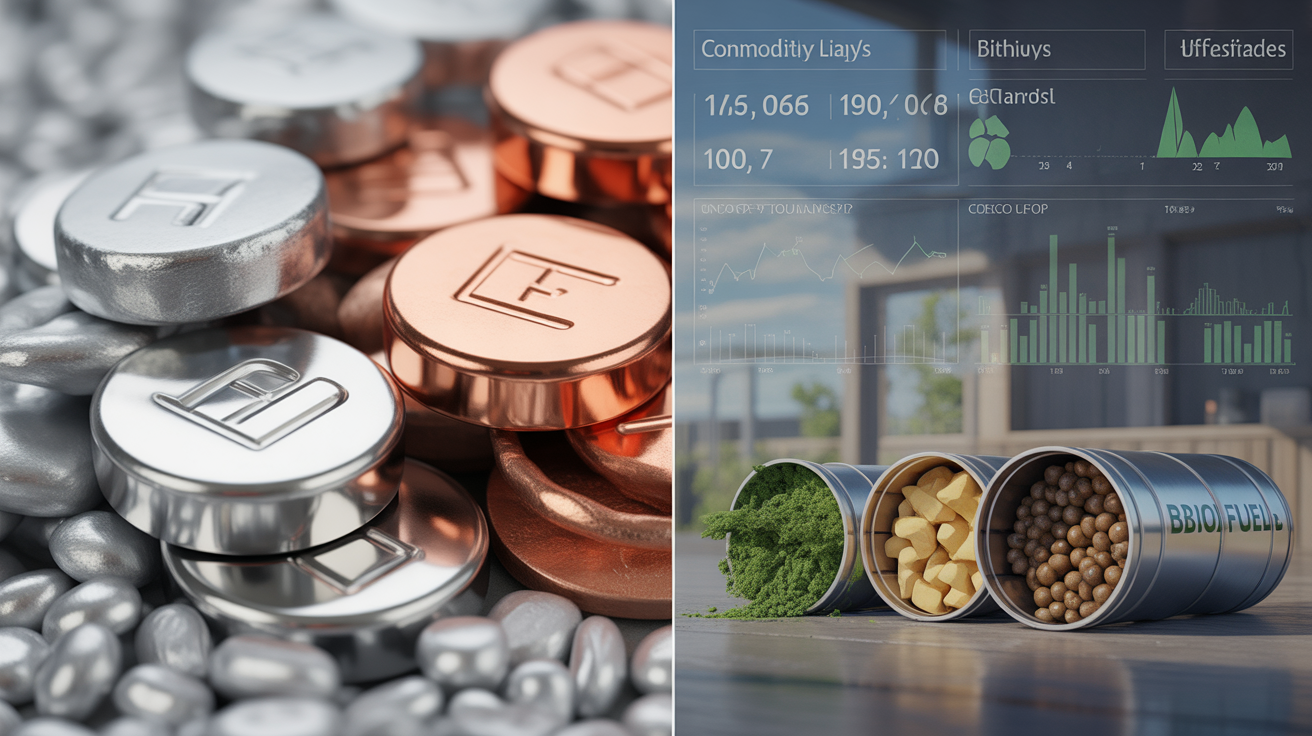
Sustainable commodities have moved from the fringe of the market into its very core. Clean metals like lithium, copper, cobalt, and nickel are now the backbone of the energy transition. Biofuels, once treated as a political football, are becoming serious tools for decarbonizing transportation, aviation, and heavy industry. Capital is flowing. Policies are solidifying. And investors who once only tracked oil inventories now spend their mornings reading about battery supply chains and crop yields.
Why does this matter right now? Because we are at one of those rare inflection points where technology, regulation, and capital all lean in the same direction. The decisions made by investors in this decade will echo for generations. Whether you are managing a portfolio or simply trying to understand where the global economy is heading, sustainable commodities tell a powerful story about growth, scarcity, and responsibility.
Let’s unpack that story, one metal and one molecule at a time.
What Exactly Are Sustainable Commodities?
At its simplest, sustainable commodities are raw materials that support environmentally responsible economic activity. That sounds clean and neat, but in practice the category is messy and evolving.
On one side, you have clean metals. These are the industrial metals that sit at the heart of electrification and renewable energy. Think copper in power grids, lithium in batteries, nickel in electric vehicles, and rare earth elements in wind turbines.
On the other side, you have biofuels. These are fuels derived from biological sources rather than fossil ones. Ethanol from corn or sugarcane, biodiesel from vegetable oils, and sustainable aviation fuel made from agricultural waste all fall under this umbrella.
What makes these commodities “sustainable” is not that their production is impact free. Mining still scars landscapes. Farming still strains soil and water. The difference is that their end use significantly reduces long term carbon emissions compared to the fossil fuel alternatives they replace.
You could argue that these markets are simply the latest chapter in the age old story of commodities following industrial change. Coal fueled the steam engine. Oil powered the automobile. Now, clean metals and biofuels are shaping the next energy system.
The Rise of Clean Metals: The Backbone of Electrification
It is impossible to talk about the energy transition without talking about metals. Renewable energy runs on them. Electric vehicles depend on them. Modern power grids would collapse without them.
Let’s start with copper, the quiet hero of the modern economy. Every electric motor, every charging station, every wind turbine generator needs copper. An electric vehicle uses roughly four times as much copper as a conventional gas powered car. Global electrification is essentially a copper story written on a planetary scale.
Then there is lithium, the star of the battery revolution. A decade ago, lithium barely registered in mainstream investment conversations. Today, it is the heartbeat of the electric vehicle supply chain. Prices have been volatile, to put it mildly. Boom cycles attract miners. Busts shake out the weaker players. Yet long term demand continues to climb as battery factories are built across North America, Europe, and Asia.
Nickel and cobalt sit in similar territory. They are crucial for high energy density batteries, especially in longer range electric vehicles and energy storage systems. Both have faced scrutiny, particularly cobalt, due to ethical and environmental mining concerns in parts of Africa. This has pushed manufacturers to rethink battery chemistries and supply relationships, adding another layer of complexity to these markets.
Even rare earth elements, a group of 17 metals with names few people can pronounce, have become strategically vital. Without them, you have no high strength magnets. Without those magnets, you have no efficient wind turbines or electric motors.
The clean metals market is not just about geology. It is about geopolitics. China dominates the refining and processing of many of these materials. The United States and Europe are racing to build secure supply chains at home or in friendly jurisdictions. Resource nationalism is back in fashion, and investors need to pay attention.
Biofuels: From Policy Experiment to Industrial Tool
If clean metals represent the hardware of the energy transition, biofuels are its liquid lifeline.
Biofuels entered public consciousness years ago as a way to reduce oil dependence and support rural economies. Early enthusiasm was followed by skepticism. Food versus fuel debates dominated headlines. Subsisides rose and fell. Many investors walked away.
Quietly, though, the industry matured.
Today’s biofuel market looks different. Advanced biofuels are made from agricultural waste, used cooking oil, animal fats, or non food crops. Sustainable aviation fuel is gaining real traction as airlines face pressure to decarbonize without feasible electric alternatives for long haul flights. Shipping companies experiment with bio based bunker fuels. Even heavy trucking is testing renewable diesel blends.
Unlike clean metals, biofuels sit at the crossroads of energy, agriculture, and environmental policy. Corn, soybeans, sugarcane, and palm oil prices feed directly into production economics. Weather patterns drive volatility. Government mandates shape demand curves overnight.
For investors, biofuels require a willingness to connect dots across sectors. An unusually dry season in Brazil can ripple through sugar output, ethanol supply, and global fuel prices faster than most models anticipate. That unpredictability is both a risk and a source of opportunity.
A Market Built on Policy and Politics
Few commodity arenas are as tied to government policy as sustainable commodities. This is not an accident. The energy transition is, in many ways, a politically engineered project.
Subsidies lower production costs. Tax credits boost demand. Emissions standards force industries to change behavior. All of it filters through commodity markets.
In the clean metals space, governments have poured billions into domestic mining, battery manufacturing, and grid infrastructure. The idea is simple: reduce reliance on foreign supply chains while accelerating renewable adoption. For investors, that means demand is not purely organic. It is incentivized.
Biofuels operate under a similar framework. Blending mandates compel refiners to include minimum percentages of biofuels in gasoline and diesel. Carbon credit systems add another revenue layer for producers who meet sustainability benchmarks.
The flip side is regulatory risk. A change in political leadership can reshape subsidy structures quickly. An environmental scandal can tighten permitting rules overnight. These markets may feel like the future, but they still live at the mercy of legislative votes.
Successful investors treat policy as a core input, not a footnote.
Supply Chains Under Strain: Scarcity Is the New Normal
One of the defining features of the sustainable commodities boom is tension. Demand is racing ahead. Supply is struggling to keep up.
Mining is slow. Opening a new copper or lithium mine can take a decade from discovery to production. Environmental approvals, community consultations, infrastructure build out, and financing hurdles all add time. Meanwhile, electric vehicle adoption curves continue climbing.
Supply chain bottlenecks compound the problem. It is not enough to dig metal out of the ground. It must be processed, refined, and turned into usable components. This midstream segment is often concentrated in just a few countries. Disruption in one link can ripple across the globe.
Biofuels face their own supply challenges. Feedstock availability fluctuates with weather and crop cycles. Used cooking oil collection systems scale slowly. Advanced biofuel technologies still struggle with cost competitiveness at industrial scale.
Scarcity has become a feature rather than a bug. Investors who understand where the tight points are in these supply chains often have an edge.
A Snapshot Comparison: Clean Metals vs Biofuels
Here is a simple way to frame the two core pillars of sustainable commodities:
| Category | Clean Metals | Biofuels |
|---|---|---|
| Primary Use | Batteries, grids, renewable infrastructure | Transportation fuels, aviation, shipping |
| Key Drivers | Electrification, EV adoption, grid upgrades | Emission mandates, renewable fuel standards |
| Supply Challenges | Long mine development timelines, processing concentration | Feedstock volatility, weather dependence |
| Price Volatility | High due to demand surges and geopolitical risk | High due to crop cycles and policy shifts |
| ESG Debate | Mining impacts, labor practices | Food vs fuel, land use concerns |
| Investor Time Horizon | Long term structural growth | Medium to long term with cyclical swings |
This table only scratches the surface, but it highlights why these markets behave differently even though both sit under the sustainability umbrella.
The Investor’s Dilemma: Chasing Growth Without Ignoring Risk
Let me paint a familiar scene. An investor reads about electric vehicle sales hitting another record. Battery factories are announced every month. Copper demand forecasts jump. Lithium prices spike. The temptation is immediate. Buy exposure now or miss the wave.
Moments later, another headline flashes. A government rolls back renewable subsidies. A mining project faces community opposition. A biofuel mandate is delayed. Prices tumble.
This emotional whiplash defines sustainable commodity investing. The opportunity is real, but so is the risk.
Volatility is not a side effect. It is structural. These markets sit at the intersection of technology cycles, political priorities, and physical production constraints. Even seasoned traders wrestle with timing.
A long term investor may choose to ignore short term noise and ride the secular trend. A tactical trader may thrive on the price swings. Both can succeed, but they need different mindsets and risk tolerances.
Story From the Market: The Lithium Whiplash
Few commodities illustrate this better than lithium.
In the early 2020s, lithium prices exploded as electric vehicle demand surged and supply lagged. Producers expanded aggressively. Investors piled in. Exploration budgets doubled. New projects were stamped into existence on feasibility studies and hope.
Then demand cooled slightly. China adjusted subsidies. New supply finally hit the market. Prices retreated sharply. Suddenly, the same market that had promised endless growth felt saturated.
Yet here we are again, watching long term projections climb as global battery targets push further into the future. The lesson is simple but expensive. Structural growth does not move in straight lines.
Those who bought at euphoric peaks learned the cost of ignoring cycles. Those who sold at the depths learned how fast sentiment can flip.
ESG Isn’t Just a Label Here
Environmental, social, and governance concerns are not marketing add ons in sustainable commodities. They are central to valuation.
Clean metals face intense scrutiny over mining impacts, water usage, community displacement, and labor practices. Investors increasingly demand traceable supply chains. Battery manufacturers want to certify that their cobalt and nickel do not come from unethical sources. This has real cost implications and can determine which producers secure long term contracts.
Biofuels carry their own ESG challenges. Land use change, deforestation, and competition with food supply spark regular controversy. Advanced biofuels that avoid food crops often command higher premiums because they meet stricter sustainability criteria.
Markets are beginning to price these considerations more explicitly. Companies with stronger ESG credentials often access cheaper capital. Those with questionable practices face regulatory delays, lawsuits, or outright bans.
For investors, ignoring ESG in this space is not just ethically questionable. It is financially reckless.
How Inflation and Interest Rates Complicate the Picture
Sustainable commodities do not exist in isolation from broader macroeconomic forces. Inflation, interest rates, and currency movements shape their performance just as they do traditional commodities.
High interest rates make capital intensive projects more expensive. Mines, refineries, and biofuel plants all require large upfront investment. When borrowing costs climb, projects slow. That can tighten future supply and ironically set the stage for higher prices later.
Inflation pushes up input costs. Equipment, labor, energy, and transportation all become more expensive. Producers pass some of that cost on to buyers when they can. If demand remains strong, prices rise. If not, margins get squeezed.
Currency fluctuations matter too. Many sustainable commodities are priced globally. A stronger dollar can make them more expensive for buyers in other currencies, dampening demand temporarily.
Investors who learned their craft strictly in equity markets sometimes underestimate how deeply macro forces influence commodity pricing. In sustainable commodities, that lesson still applies in full.
Where the Real Growth Could Be Hiding
It is tempting to focus only on the headline materials like lithium and ethanol. Sometimes the quieter corners of the market offer equally compelling growth.
Consider copper again. It lacks the futuristic appeal of battery minerals, yet every renewable project depends on it. Grid upgrades alone represent one of the largest infrastructure efforts in modern history. The demand curve is steady, relentless, and global.
Recycled metals are another overlooked frontier. As sustainability standards tighten, recycled copper, aluminum, and nickel gain importance. Recycling reduces energy use and emissions compared to primary mining. That makes secondary supply increasingly valuable.
In biofuels, sustainable aviation fuel stands out. Airlines have limited alternatives. Electric flight at scale remains decades away for long haul routes. Bio based jet fuel offers one of the only viable decarbonization pathways in the near term. Mandates and corporate net zero commitments could create a durable demand floor.
Sometimes the biggest opportunities sit in the second or third derivative of a trend, not the headline itself.
Portfolio Strategy: How Do You Actually Invest Without Getting Burned?
Every investor approaches sustainable commodities differently, but a few principles come up again and again in professional circles.
Diversification matters more than usual. These markets are volatile and policy sensitive. Spreading exposure across multiple metals, fuels, and geographies can soften the blows when one segment stumbles.
Time horizon should guide position sizing. If you believe in the long term electrification story, you can tolerate drawdowns. If you rely on shorter term gains, risk management must be tighter.
Understand where you sit in the value chain. Mining companies behave differently from refiners. Biofuel producers face different risks than feedstock suppliers. Even within the same commodity, upstream and downstream businesses move on different rhythms.
Liquidity should never be an afterthought. Some sustainable commodity exposures trade in thin markets. Wide bid ask spreads and limited exit routes can turn manageable losses into painful ones during fast selloffs.
Above all, investors must resist the urge to treat sustainable commodities as a single unified theme. It is a diverse, fragmented ecosystem with its own internal winners and losers.
The Hidden Role of Technology
Technology quietly reshapes these markets every year.
Battery chemistry evolves. New formulations reduce reliance on scarce or controversial materials like cobalt. Recycling technologies improve recovery rates. Biofuel conversion processes become more efficient. Each innovation nudges supply and demand in subtle ways.
Sometimes technology creates new demand overnight. Other times, it quietly erodes it. When a new battery design reduces nickel usage by ten percent, that does not sound dramatic. Multiply that change across millions of vehicles, and you start to see why long term forecasts shift so often.
For investors, the lesson is humility. Extensive spreadsheets and demand models are only as good as the assumptions beneath them. Technology has a way of rewriting those assumptions when least expected.
Global Equity Flows and the Search for Meaningful Growth
There is also a psychological layer to sustainable commodity investing. Many institutional investors now face pressure from clients to demonstrate real world impact alongside financial performance. Clean metals and biofuels offer tangible narratives. You are not just chasing returns. You are funding the materials of a cleaner energy system.
This dual mandate affects capital flows. Pension funds, sovereign wealth vehicles, and large asset managers increasingly allocate toward sustainable themes. That capital supports project financing, reduces funding costs, and accelerates development.
At the same time, accountability is rising. Greenwashing is under fire. Investors demand evidence that projects truly reduce emissions across their full life cycle. This scrutiny raises the bar for new entrants.
From a market perspective, these dynamics can amplify both booms and busts. When sentiment is positive, capital floods in quickly. When trust erodes, it can just as quickly exit.
Opportunities for Different Types of Investors
Not everyone approaches these markets with the same goals.
Long term investors often favor diversified exposure through producers tied to the energy transition, focusing on balance sheet strength and reserve quality.
Income focused investors may look at established biofuel companies benefiting from steady mandates and predictable cash flow.
Growth oriented investors chase emerging technologies in advanced biofuels or novel battery materials, knowing full well the risks resemble venture style bets.
Even traditional commodity traders find fertile ground here, arbitraging seasonal biofuel spreads or exploiting short term shortages in metals.
There is no single correct path. What matters is matching strategy to risk tolerance and time horizon with clear eyes.
Common Pitfalls to Avoid
Every emerging market attracts its share of hard lessons. Sustainable commodities are no exception.
One of the biggest mistakes is confusing a compelling narrative with guaranteed profits. The energy transition is real. That does not mean every related asset is undervalued.
Another trap is underestimating political risk. Subsidies create demand. They can also disappear. A single election can reshape market economics.
Many investors also underestimate operational risk. Mines flood. Refineries break down. Crop yields collapse under extreme weather. These are not theoretical risks. They happen with uncomfortable regularity.
Finally, sentiment cycles can be brutal. When enthusiasm peaks, valuations often price in perfection. When disappointment hits, prices can overshoot to the downside just as violently.
Awareness does not eliminate these risks, but it does prevent them from arriving as total surprises.
Practical Takeaways for Everyday Investors
If you are looking to engage with sustainable commodities in a thoughtful way, a few grounded actions can make a real difference:
-
Follow policy as closely as price. Legislative updates matter as much as inventory data.
-
Track end use demand, not just production headlines. Electric vehicle sales, grid investment, and aviation fuel usage offer valuable signals.
-
Question optimistic forecasts. Ask what assumptions they rely on and how sensitive they are to change.
-
Pay attention to ESG disclosures. They increasingly affect financing, partnerships, and long term viability.
-
Keep position sizes in proportion to volatility. These are not “set and forget” markets.
Above all, stay curious. Sustainable commodity markets reward those who put in the work.
The Emotional Side of Sustainable Investing
It is easy to forget that behind every market chart are human decisions. Farmers deciding what to plant. Engineers choosing which battery chemistry to pursue. Policymakers debating mandates behind closed doors. Communities negotiating with mining companies over land use.
For many investors, sustainable commodities also carry an emotional weight. There is a sense of participation in something larger than quarterly earnings. You are watching the raw materials of a cleaner future move through the same old cycles of greed, fear, scarcity, and innovation that have defined commodities for centuries.
That mix of idealism and hard reality is what makes this sector so fascinating and at times so frustrating.
Looking Ahead: What the Next Decade May Hold
If current trends hold, the next ten years will see:
-
Massive expansion of battery manufacturing capacity.
-
Significant investment in grid modernization.
-
Tightening emissions standards across transportation.
-
Rapid scaling of sustainable aviation fuel.
-
Increased scrutiny of mining practices and supply traceability.
These forces suggest long term demand support for clean metals and biofuels. Yet they also imply persistent volatility as industries scale, stumble, and adjust.
The energy transition is not a straight line. It zigzags through politics, technology, and human behavior. Investors who expect smooth returns will be disappointed. Those who accept turbulence as part of the terrain stand a better chance of staying the course.
Conclusion: A Market Where Profit and Purpose Intersect
Sustainable commodities sit at a rare intersection. They are driven by profit, shaped by policy, and powered by a global desire for cleaner energy. Clean metals form the skeleton of the electrified world. Biofuels keep planes flying and trucks moving while cutting emissions along the way.
Investing in this space is not a feel good exercise alone. It demands a clear understanding of supply chains, geopolitical forces, technological change, and policy risk. It rewards patience, diversification, and respect for volatility.
For those willing to navigate its complexities, sustainable commodities offer more than just returns. They offer a front row seat to one of the biggest economic transformations in human history. The transition from fossil fueled growth to a low carbon system will not be neat or painless. But it will be material. Literally.
And in commodities, material always matters.