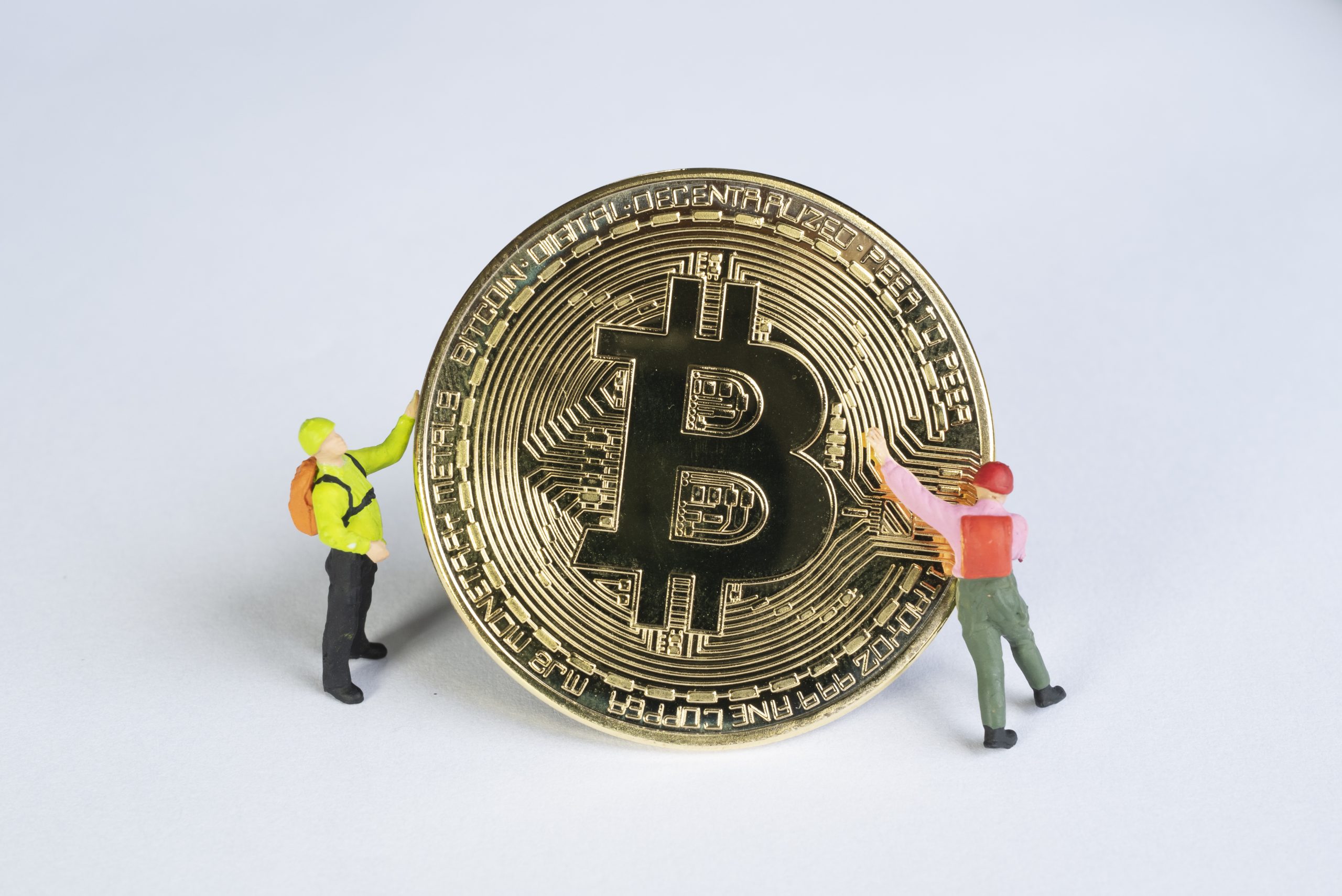
On a quiet Sunday morning not long ago, I checked my phone expecting the usual mix of headlines and market noise. Instead, Bitcoin had tacked on another sharp move higher overnight. The kind that makes even seasoned traders do a double take. Screens were glowing green, social feeds were buzzing again, and a familiar question was back on everyone’s lips: how high can this thing really go?
For some investors, the answer is nothing short of breathtaking. A growing chorus of analysts, fund managers, and crypto diehards is floating a bold target, $250,000 per Bitcoin. It sounds outlandish at first blush. Then again, so did $10,000 once upon a time. So did $60,000. Crypto has a habit of making yesterday’s fantasy look like today’s footnote.
What makes this moment different is not just the price action. It is the mix of institutional money, macro forces, regulatory shifts, and a new generation of investors treating Bitcoin less like a tech experiment and more like a macro asset. The stakes feel bigger. The sums, certainly, are bigger. And the consequences, for better or worse, are far more real for everyday portfolios now.
So let’s slow this down, cut through the hype, and ask the hard question with clear eyes: is a $250K Bitcoin actually realistic, or is it just another fever dream born in the middle of a bull run?
From garage experiment to global asset
To understand where Bitcoin might go, it helps to remember where it came from. In 2009, Bitcoin was little more than a cryptography project bouncing around niche internet forums. Early users mined coins on laptops for fun. One of the most famous transactions involved 10,000 Bitcoin for two pizzas. At today’s prices, that is the most expensive lunch in history.
Fast forward to now, and Bitcoin trades on major exchanges, sits on the balance sheets of publicly listed companies, and is discussed on the same TV shows that cover central bank policy and earnings season. Hedge funds trade it. Pension funds are dabbling. Governments are regulating it. A few have even adopted it as legal tender.
That evolution alone reshapes the conversation about price. When Bitcoin was an experiment, wild valuations were easy to dismiss. Now it lives in the same ecosystem as stocks, bonds, commodities, and currencies. It competes for capital against everything from Treasury bills to gold bars.
The path from zero to tens of thousands per coin was powered by a mix of curiosity, speculation, and early belief. The next leg of the journey, if it truly heads toward the $250K mark, will be driven by far more traditional forces: supply and demand, liquidity, policy decisions, and investor psychology at scale.
The numbers behind the $250K dream
At first glance, $250,000 sounds like a clean, headline-friendly number. Dig into it, and it represents far more than just a big round target. At that price, with roughly 19.7 million coins already mined and a hard cap of 21 million, Bitcoin’s total market value would push beyond $5 trillion.
To put that in perspective, that would place Bitcoin comfortably among the most valuable assets on the planet. It would rival gold’s investment-grade market value and sit in the same league as the largest global equity markets.
Here is a simple snapshot to ground the conversation:
| Asset or Market | Estimated Market Value |
|---|---|
| Global Gold (Investment) | Around $12 trillion |
| US Stock Market | Around $50 trillion |
| Global Bond Market | Over $130 trillion |
| Bitcoin at $100K | About $2 trillion |
| Bitcoin at $250K | About $5 trillion |
Numbers like these cut both ways. On one hand, $5 trillion is enormous. On the other, in a world awash with hundreds of trillions in global assets, it is not unthinkable that Bitcoin could eventually command a few trillion in value if it continues to mature as a financial instrument.
The real question is not whether the number is mathematically possible. It clearly is. The bigger question is whether the conditions exist for that much capital to flow in and stay in.
The supply side is locked in steel
If Bitcoin had one defining feature that separates it from every government-issued currency on the planet, it is supply. There will only ever be 21 million coins. No emergency meetings. No stimulus packages. No printing presses firing up when times get tough.
Every four years or so, the rate at which new Bitcoin is created is cut in half. These events, known as halvings, have historically played a major role in Bitcoin’s long-term price cycles. Each halving reduces the new supply entering the market while demand, in theory, keeps growing.
Think of it like a small town where the gold mine starts producing half as much metal each year. If the population keeps rising and everyone still wants a piece of gold, the math begins to skew in favor of higher prices.
What has changed in recent years is who is on the demand side of that equation. It is no longer just retail traders on apps. It is asset managers running billions. It is publicly traded companies parking excess cash. It is, increasingly, institutions that operate on multi-year time horizons and have little interest in day trading noise.
When fixed supply meets expanding pools of long-term capital, interesting things can happen.
Wall Street has entered the chat
A few years ago, the idea of major Wall Street firms offering direct Bitcoin exposure would have felt strange. Now it is almost routine. Spot Bitcoin investment products, trading desks, custody services, and research coverage have all moved from the fringe to the mainstream.
This matters more than many realize. Institutional investors do not just bring larger checkbooks. They bring liquidity, derivatives markets, hedging tools, and, perhaps most importantly, legitimacy. When a pension fund allocates even a tiny percentage of its assets to Bitcoin, it sends a powerful signal to every conservative investment committee watching from the sidelines.
I remember speaking to a portfolio manager in early 2021 who admitted his firm had debated Bitcoin behind closed doors for years. Not because they loved it, but because they were terrified of explaining to clients why they ignored an asset that kept doubling. That fear of professional embarrassment is a strange but potent form of demand.
If Bitcoin is ever going to make a serious run at $250K, it will not be driven by small traders alone. It will be powered by slow, steady institutional adoption that barely makes headlines but quietly soaks up supply month after month.
The macro backdrop: inflation, debt, and distrust
Bitcoin does not trade in a vacuum. It breathes the same air as bond markets, central banks, and political risk. Over the past few years, the global economy has undergone shifts that would have seemed unthinkable a decade ago.
Massive stimulus programs, ballooning government debt, and bouts of stubborn inflation have reshaped how investors think about money itself. For many, Bitcoin’s appeal is no longer just about fast gains. It is about hedging against a system that feels increasingly stretched.
Gold has held that role for centuries. Bitcoin is now making a convincing case as a digital alternative, especially for younger investors who are more comfortable securing a wallet than storing bullion.
When inflation flares and real yields sink, scarce assets tend to shine. If the next decade brings renewed currency debasement, fiscal stress, or loss of faith in conventional policy tools, Bitcoin’s narrative as digital hard money could gather real momentum.
That narrative alone will not take Bitcoin to $250K. But combined with the supply mechanics and institutional flows, it becomes one more log on an already growing fire.
A look back at past cycles
Bitcoin’s history is a series of violent booms and painful busts. Each cycle brings new believers and leaves behind a trail of skeptics nursing losses. Yet, with every crash, the long-term price floor has settled higher than before.
In 2013, Bitcoin burst from under $100 to over $1,000 before collapsing. In 2017, it rocketed from $1,000 to nearly $20,000, only to crash again. In 2021, it surged past $60,000, fell sharply, and then entered another long winter.
Each time, critics declared the experiment dead. Each time, the network absorbed the shock, new users trickled in, and the next cycle climbed to a higher altitude.
This pattern does not guarantee future gains, but it does show that Bitcoin has a track record of recovering from extreme drawdowns. For long-term holders, the path has been anything but smooth, yet the destination keeps drifting higher over time.
This historical context is why some analysts feel comfortable projecting targets that once seemed absurd. They extrapolate from a decade of exponential adoption and assume that the next wave will be bigger still.
Who is buying at these levels?
One of the most telling shifts in recent years is the profile of the average Bitcoin buyer. Early on, it was hobbyists and speculators. Now, it increasingly includes corporate treasurers, family offices, and wealth managers acting on behalf of clients.
Retail investors still play a huge role, especially during euphoric phases. But when prices are climbing steadily rather than surging wildly, it often signals quieter accumulation by deeper-pocketed players.
I once sat in a café with a retired engineer who had spent most of his life building a traditional stock portfolio. He told me he did not really “believe” in Bitcoin, but he had bought some anyway after watching his grandchildren use digital wallets as casually as he once used a checkbook. “I might be wrong,” he said with a shrug, “but I do not want to be the only old man who missed it twice.”
That kind of quiet, almost reluctant participation is not what you expect at the top of a speculative bubble. It sounds more like the early stages of normalization.
The arguments for $250K
Supporters of the $250K target tend to cluster around a few core ideas.
First, there is the digital gold thesis. If Bitcoin captures even a meaningful slice of gold’s role as a store of value, prices north of $200K become easier to justify. Gold’s market dwarfs Bitcoin’s current size. A partial migration of capital would go a long way.
Second, there is the fixed supply dynamic. As more coins move into long-term storage by institutions and individual holders alike, the available trading supply shrinks. In markets with inelastic supply, prices can overshoot dramatically during periods of strong demand.
Third, there is global accessibility. Bitcoin is traded worldwide, 24 hours a day, without regard for borders. In countries grappling with currency instability or capital controls, Bitcoin offers an escape valve that traditional assets cannot. Even modest adoption across large populations can add up.
Finally, there is the power of reflexive markets. Rising prices attract attention. Attention brings new buyers. New buyers push prices higher, at least for a time. This self-reinforcing loop has driven every major Bitcoin rally to date.
Put all of that together, and the road to $250K looks less like science fiction and more like an extreme but plausible outcome under the right conditions.
The risks no one should ignore
Now for the other side of the coin, because no serious discussion about Bitcoin’s future is complete without a hard look at the hazards.
The most obvious risk is regulation. While the industry has made strides toward legitimacy, governments still hold enormous power. Sudden policy shifts, punitive taxes, or outright bans in major economies could chill demand overnight. We have seen how quickly regulatory news can move the market.
Volatility itself is another double-edged sword. The same wild swings that attract traders also scare away conservative capital. A 10 percent daily move may excite speculators, but it terrifies retirement fund managers. For Bitcoin to sustain trillion-dollar valuations, it must gradually shed its reputation as a financial roller coaster.
There is also the technological wildcard. While Bitcoin’s core protocol has proven remarkably resilient, no system is immune to risks over a multi-decade horizon. Advances in computing, unforeseen security flaws, or disruptive innovations from competing networks could all erode confidence.
And then there is the most human risk of all: sentiment. Markets do not move purely on spreadsheets and models. They move on emotion, storytelling, fear, and greed. If the narrative around Bitcoin were to sour for an extended period, capital could leave just as quickly as it arrived.
These risks do not mean $250K is impossible. They simply remind us that the path, if it exists, will be paved with uncertainty.
A tale of two investors
To bring this closer to home, imagine two investors watching Bitcoin’s rally from the sidelines.
The first, let’s call her Maria, bought a small amount years ago after reading about blockchain in a business magazine. She forgot about it for long stretches, checked in occasionally, and never panicked during downturns. Today, her initial investment has ballooned beyond anything she expected. For her, the idea of $250K feels thrilling but also slightly abstract. She is already playing with house money.
The second, we will call him Daniel, discovered Bitcoin during a recent surge. He watches charts nightly, reads social media, and feels the tug of every green candle. For him, the $250K target is a siren song that could justify going all-in. At the same time, every dip feels like a warning.
Both investors are reacting to the same asset and the same headlines, yet their emotional landscapes are worlds apart. That difference often matters more than the price target itself.
Markets reward patience far more often than they reward excitement.
What would need to happen for $250K to become realistic?
For Bitcoin to make a credible run toward $250,000, several broad conditions would likely need to align.
Institutional adoption would have to deepen materially, not just through token allocations but as a standard component of diversified portfolios.
Market infrastructure would need to continue improving, with better custody solutions, more robust derivative markets, and clearer regulatory frameworks in major jurisdictions.
Macroeconomic conditions would likely need to remain supportive of scarce assets. That could mean persistent inflation, negative real rates, or growing distrust in fiscal discipline.
Public perception would also need to evolve. Bitcoin would need to be seen less as a speculative toy and more as a long-term financial asset, much as equities themselves underwent in the early 20th century.
None of these developments are guaranteed. Yet none are outlandish either. They are extensions of trends already underway.
A quieter but crucial factor: generational wealth transfer
One underappreciated force in the Bitcoin story is demographics. Over the coming decades, trillions of dollars will pass from older generations to younger ones. These younger investors, having grown up online, display a markedly different relationship with digital assets.
For many of them, holding cryptocurrency feels no stranger than holding shares in a tech company. As this group gains financial clout, their preferences will influence asset allocation across the global economy.
If even a small fraction of this generational wealth finds its way into Bitcoin as a core holding rather than a speculative fling, the long-term price implications could be substantial.
It is not dramatic enough to make daily headlines, but quietly, it may be one of the most powerful tailwinds in the entire story.
Practical takeaways for everyday investors
So where does all this leave the average reader who is curious, intrigued, but understandably cautious?
First, it is vital to separate possibility from probability. A $250K Bitcoin is possible under certain scenarios. That does not mean it is the most likely outcome over any given time frame.
Second, position sizing matters more than price targets. Bitcoin’s volatility can be both exhilarating and brutal. Allocating an amount you can emotionally and financially tolerate is far more important than trying to nail a specific future price.
Third, perspective is everything. If you believe in Bitcoin’s long-term role, daily price swings become noise. If you are chasing short-term gains, those same swings can feel existential.
Fourth, diversification remains your friend. Bitcoin can be a powerful addition to a portfolio, but it should rarely be the entire story. Even the most enthusiastic advocates of digital assets tend to keep exposure within disciplined limits.
Finally, education beats excitement. Understanding how Bitcoin works, why it moves, and what risks it carries will serve you better than any viral price prediction.
The psychological pull of big numbers
There is something about round, eye-catching numbers that captures the imagination. $10K, $100K, $250K. These figures take on a life of their own in market folklore. They act like magnets for attention and, sometimes, for capital.
The danger is that big numbers can overshadow big questions. What will Bitcoin be used for in ten years? How will it coexist with evolving financial systems? Will it be embraced, regulated into submission, or something in between?
Price is just one dimension of the story. Long-term value is built on utility, trust, and resilience. If Bitcoin continues to strengthen in those areas, the price will take care of itself, one cycle at a time.
A realistic, hopeful conclusion
Is the $250K target realistic? The honest answer is that it sits at the outer edge of plausible outcomes, not in the realm of guaranteed destiny, but not in the fantasy bin either.
Bitcoin has defied expectations for over a decade. It has weathered crashes that would have destroyed most financial experiments. It has grown from a curiosity into a global asset class. And it continues to attract new believers, not just for quick profits but as a long-term store of value in an uncertain world.
At the same time, it remains a young, volatile, and controversial asset. Its future will be shaped by policy makers, technologists, investors, and social sentiment in ways no model can fully predict.
For investors, the wisest stance may be one of grounded optimism. Recognize the extraordinary upside without becoming blind to the risks. Participate thoughtfully rather than emotionally. And remember that the journey to any ambitious price target will almost certainly be marked by sharp detours and uncomfortable drawdowns.
Bitcoin does not need to reach $250,000 to be one of the most remarkable financial stories of our time. But if it ever does, it will not arrive there in a straight line, and it will not be because of hype alone. It will be because, for a growing slice of the world, this strange digital coin earned its place at the table.
And that, more than any single number, is the real story to watch.